Flying over Great Salt Lake, Utah - And what I learned.
It's not all good news..
Over a year ago I sent in an application to fly with Eco Flights over Great Salt Lake because I was hoping by flying in a small Cessna I would get a better perspective on just how our inland sea, Great Salt Lake, is doing.
Let me start off by explaining to those of you who are new to the issues surrounding Great Salt Lake. Our terminal lake is on the verge of collapse, and over the past century she has been horribly mistreated, misused, and mismanaged. Think of GSL (Great Salt Lake) and the three rivers who who pump vital life into her as a vascular system, our lake as the heart, and the three rivers - the Jordan, Weber, and Bear as the arteries. These three rivers are essential for her life, and from my recent explorations, I discovered that those rivers are being depleted by overuse before they even get a chance to reach Great Salt Lake. “Grow the Flow,” a citizen-led non-profit group who is advocating for Great Salt Lake has a lake tracker on their website. Here is the recent data:
GSL is 6.1’ below the minimum healthy level of 4,196’
53.5% of the lakebed is exposed
And is only 36.1% Full
Please take a few minutes, sit back, relax, and read this blog, where I will intermix and share with you: (please feel free to share - thank you)
Information about Eco Flight and their mission.
Aerial Images I photographed with some textual information.
Photographing from the air, the challenges and rewards
Personal reflections and a comparative analysis surrounding the state of Great Salt Lake.
I have also personified our lake, as a way of hoping to reimagine a caring community for Great Salt Lake. We care for those we love.
What you can do to create a different ending for GSL with some difficult confronting questions.
Final notes about Great Salt Lake


Three of the many islands on Great Salt Lake.

Microorganisms and Algae Growing on Great Salt Lake.
Flying above our beloved lake, I felt more ravaged than I thought I would, I was near tears as I peered out the window, and had to pause to catch my breath. Our lake looks sick, and she looks so much worse from the air than when I had observed her from the shore, even though I didn’t think this was possible.

There are 21 industries on Great Salt Lake using the water, brine shrimp, and brine flies to create a variety of minerals, including: Sulfate of Potash, Magnesium Chloride, Salt - Sodium Chloride, and Lithium.
As we flew overhead our fractured lake and industrial usage was pronounced. GSL has been considered a liquid asset, instead of living body of water who has lived in this valley for thousands of years. Chemicals are leeching into our lake - poisoning her and us with air-borne chemicals such as arsenic, mercury, lead, and copper.
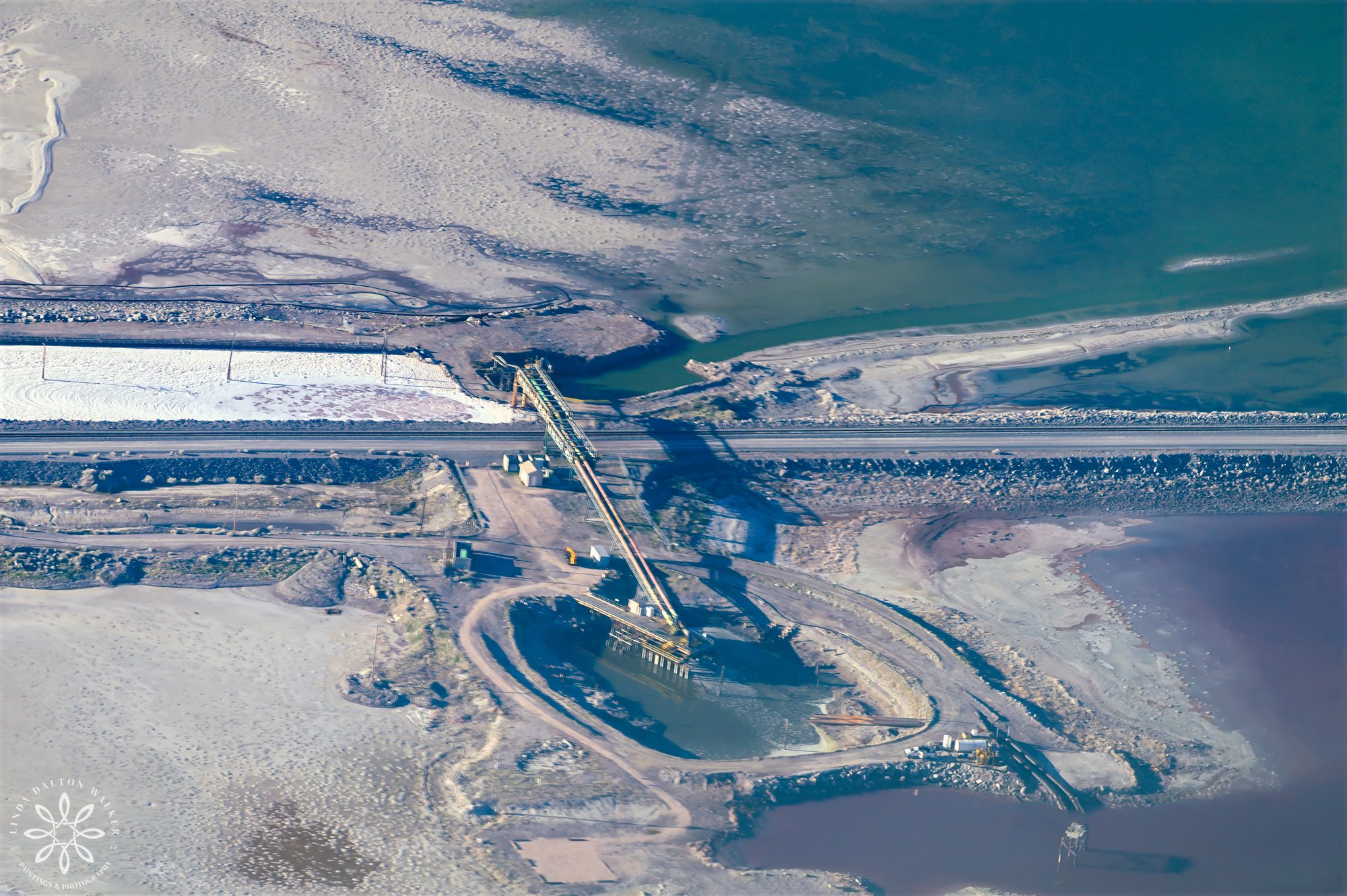
Compass Minerals is the corporation in these two images. Corporations have rights, but oddly enough Great Salt Lake has no rights and can be used as we declare.
Compass Minerals operates a 55,000-acre solar evaporation pond in Great Salt Lake.
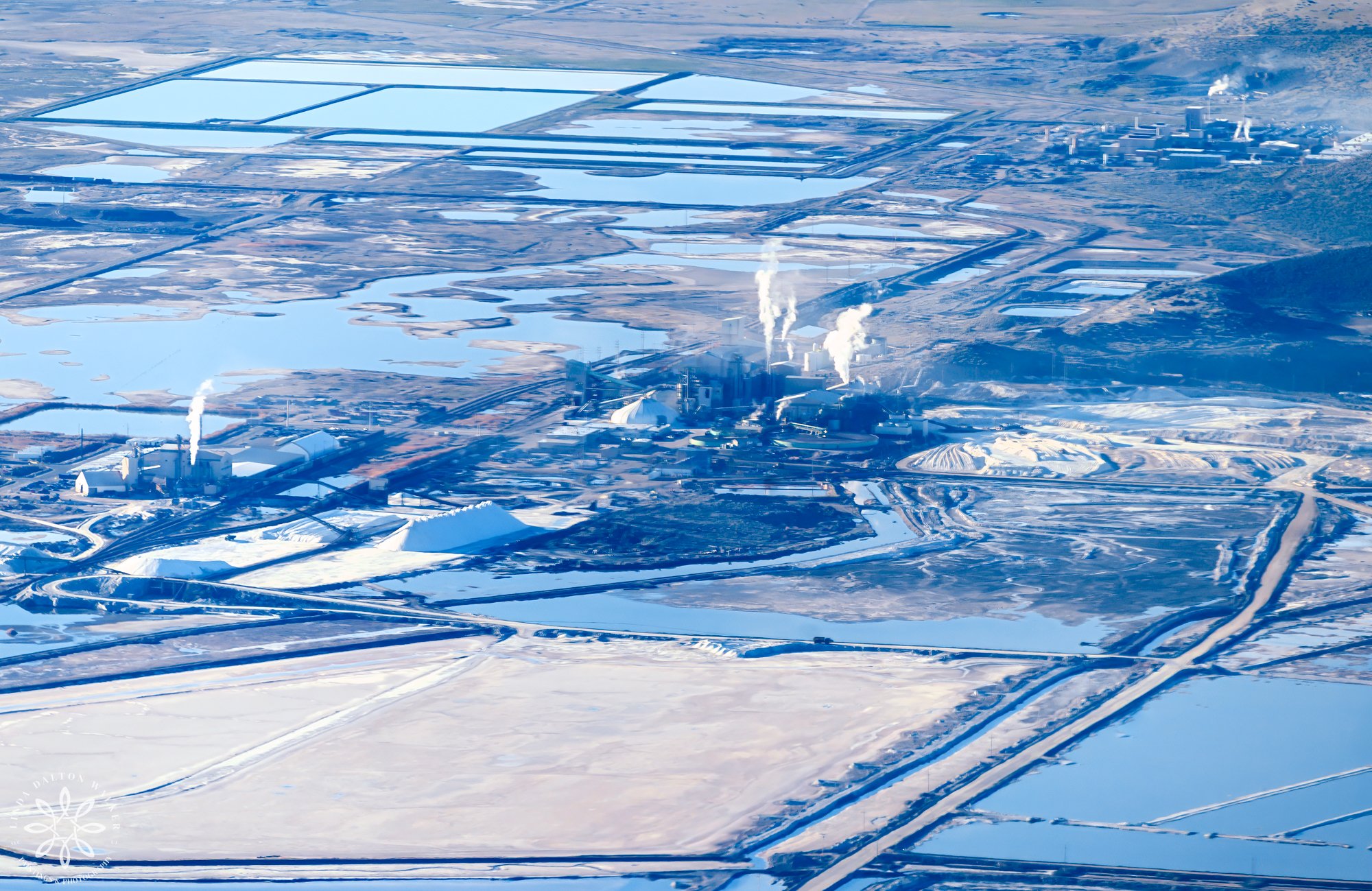
Compass Minerals is the largest producer of sulfate of potash, and magnesium Chloride in North America.
This particular company has been on Great Salt Lake’s shores since 1970. It is located on the boundary of Bear River Bay and Ogden Bay, with additional operations on the west side in Clyman Bay. It is the largest mineral extraction water user on GSL; depleting 111,700 acre-feet annually, primarily through evaporation ponds as you can see in the two images above.
To clean the excess salts from their evaporation ponds, Compass flushes them with fresh water from Bear River Bay, a vital wetland for aquatic and avian species.
Throughout my images you will notice fracturing of Great Salt Lake, and whenever you see this, know that it is due to various industries along the shores.

Eco Flight
Eco Flight gets people above regions of land, to help draw attention to crucial environmental conservation issues.
Eco Flight’s Mission - from their website.
“EcoFlight uses small aircraft to provide the aerial perspective to educate and advocate for our remaining wildlands, watersheds, and culturally important landscapes. From the air, we connect stakeholders with differing viewpoints to advance our goals of conservation and environmental justice.
To educate and advocate for the protection of wildlands, wildlife habitat, watersheds, and culturally important landscapes using small aircraft.”
Here is a link to their website, where you can read more about them, and donate to their efforts. They were the greatest people to work with.

Aerial view of a zoomed in section of Great Salt Lake.
I paused even longer as I looked upon GSL’s thinning, shallow layer of water with the dark crustaceans and plant life growing in places where water should have been. It reminded me of when we as humans near the end of our life, how our skin becomes thin and papery to the touch. Almost too late we have awakened to her tragedy.
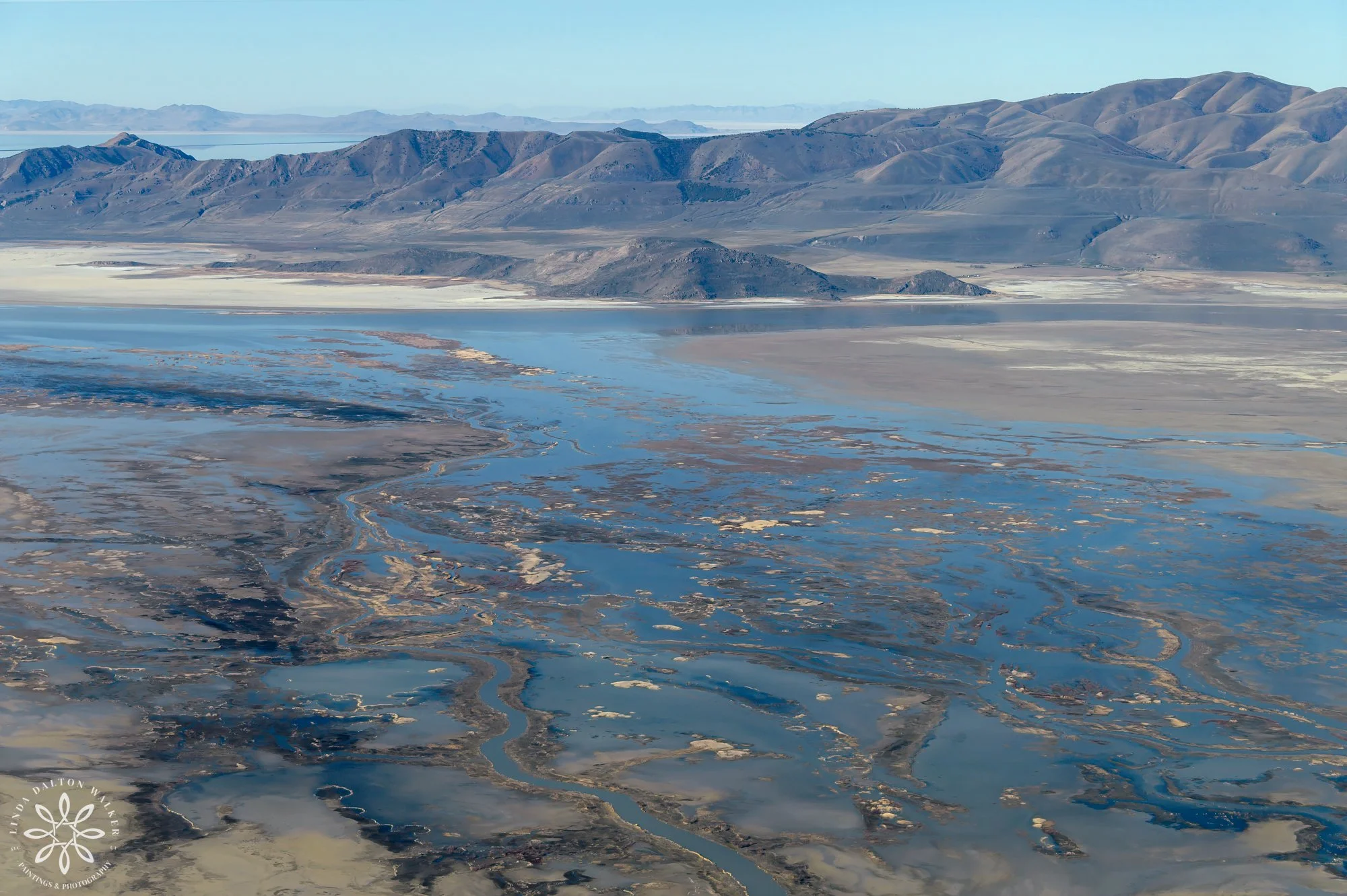
A Haunting Aerial view of Great Salt Lake with Promontory Mountain Range.
I often refer to Great Salt Lake as a mother - Our Mother Lake - she has nurtured many of us who have grown up in this valley and those who live in the state of Utah. I have loved our lake for so many years, and she has loved many of us back, always giving, and never asking for anything in return.

I grew up not only in my own mother’s arms, but in those of Great Salt Lake, floating in her salty waters with my siblings, building sandcastles in the sand with my sons, skiing in the glorious soft powder that only the salt evaporation from our lake can create, hiking her shores and those of our ancient grandmother, Lake Bonneville, and over the past 30+ years, painting and photographing her image and the birds and animals who rely on her for survival. It made me wonder, what if Great Salt Lake had rights, the right to flourish, the right to flow free, instead of controlling her with ownership and management.

A note about the photography:
Photographing through a plexiglass window renders an unwanted greenish cast to images. If there was red or pinkish color in the landscape, this greenish cast neutralized those complementary colors.
In the past I have flown in a small helicopter and a float plane in Alaska, and had the opportunity to photograph from both of them. It is a challenge flying above the terrain, and photographing through a small, plexiglass window while moving at roughly 120 MPH. Luckily my 30+ years of experience behind a camera paid off.
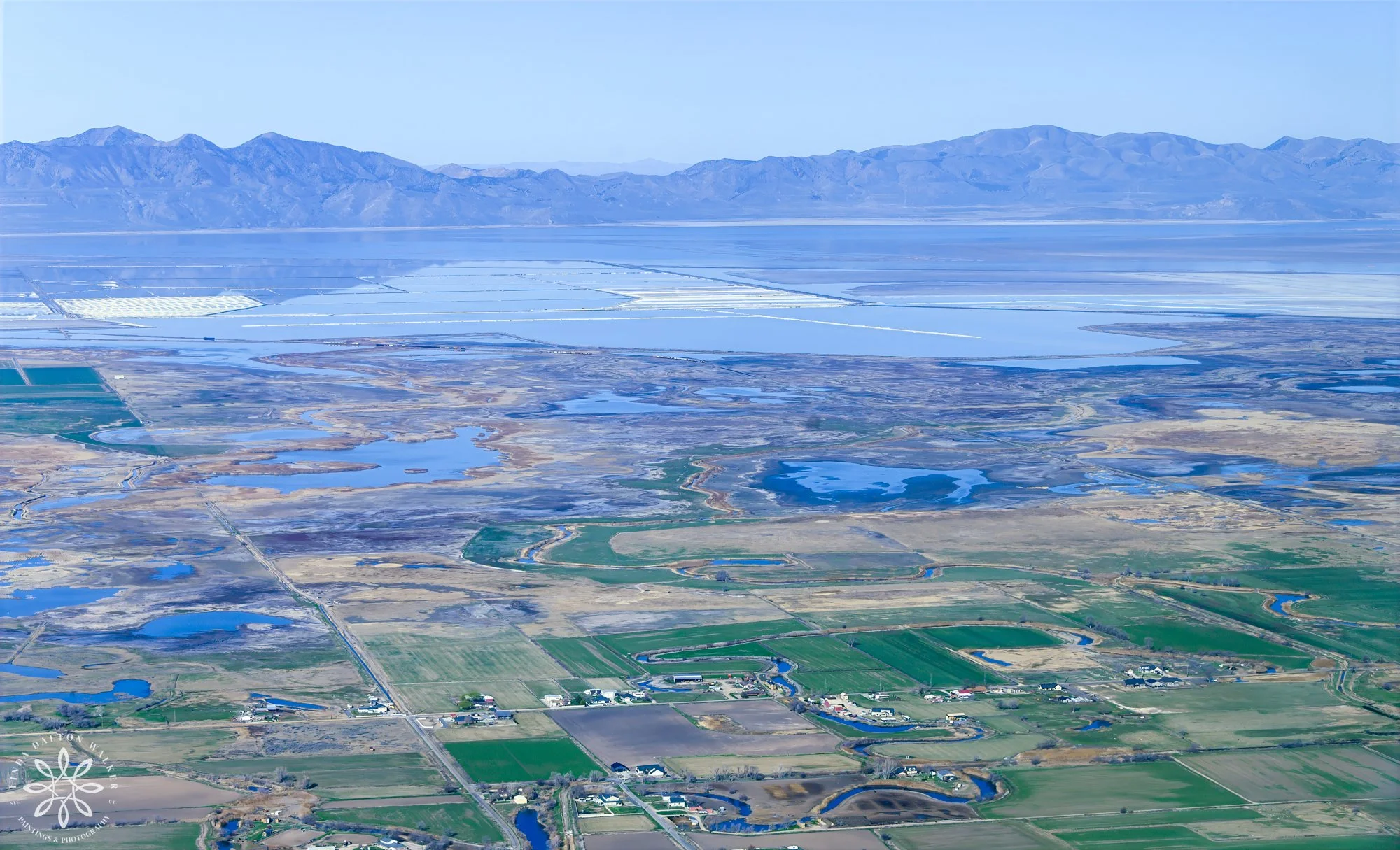
Aerial shot of Great Salt Lake with fractured evaporation ponds, and the meandering of Weber River in the foreground.
Lack of focus is another factor when photographing through plexiglass.
To say I spent hours on post-processing is not a far cry from the truth.
That being said, if this is the only way I can get images to show you just how critical this period of time is for Great Salt Lake, I’ll take what I can, and some of the images I am very happy with. If you would like to add them to your collection, CONTACT me and let me know.
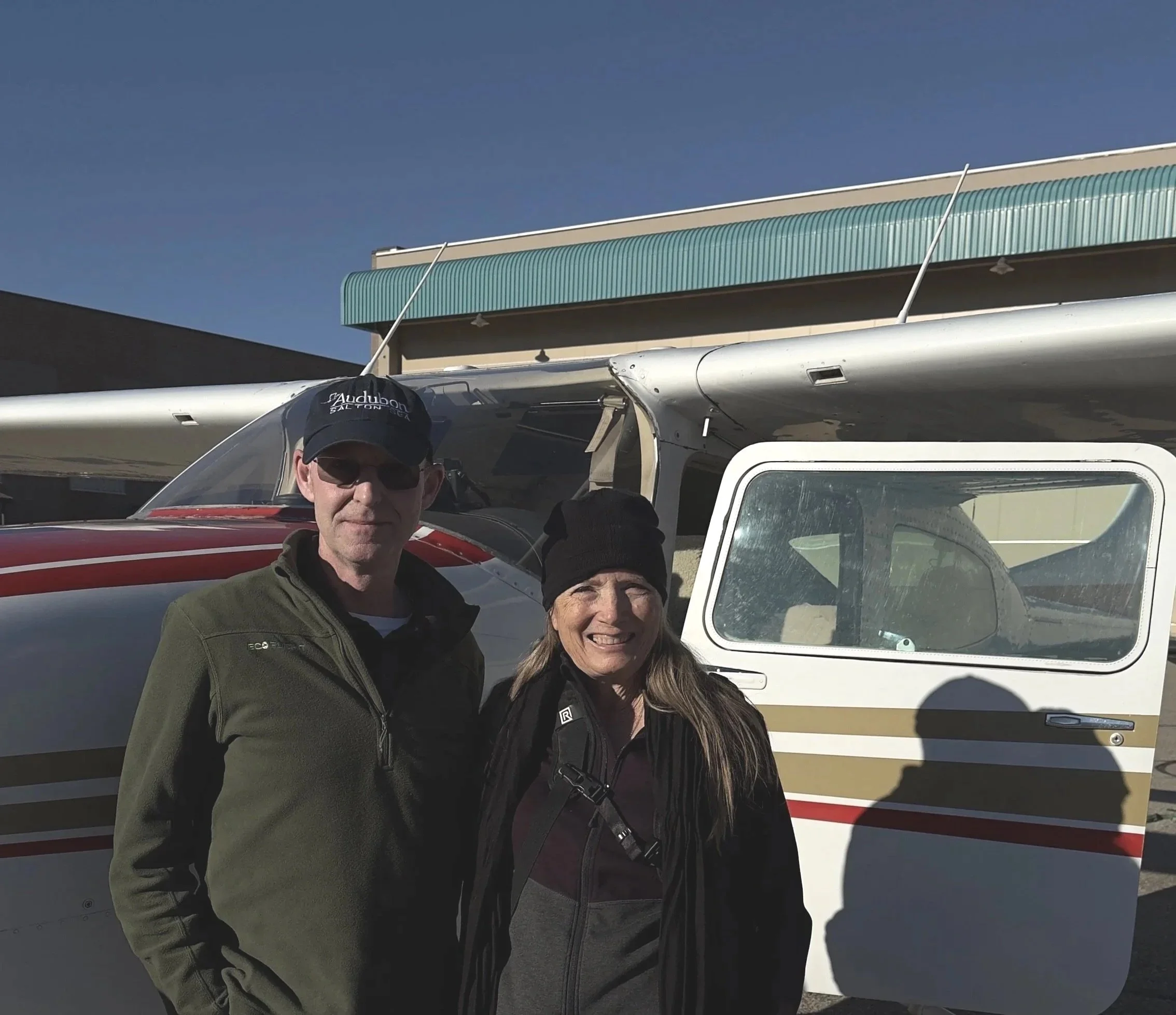
Eco Flight Pilot, Gary
Our pilot, Gary, put me in the seat behind him, so if at any moment I wanted him to open a window for me to photograph, I could just let him know. Being ready for an open window took a bit more preparation and thought. I instantly took off my lens hood, so I wouldn’t lose it into the landscape below. We only tried the open window three times because it created quite a bit of turbulence inside the small aircraft. The rest of them are taken through the window.

Aerial View of the Separation of the North and South Chambers of Great Salt Lake Divided by Lucin Cutoff.
When we passed over the North Chamber of Great Salt Lake, and my images didn’t look pink or red or green like I was visually seeing, I asked Gary to open the window. I was not prepared for the blast of wind, and holding my camera steady was a challenge. Before I took these shots, I had draped my black scarf over Gary’s seat because his white seat covering was reflecting into the window. Yikes, as the window opened, I almost lost my scarf, luckily I was able to quickly retrieve it.

I photographed this image of the North Chamber of Great Salt Lake, just north of the Lucin Cutoff, with the window open. In this way I was able to capture the true colors below me.
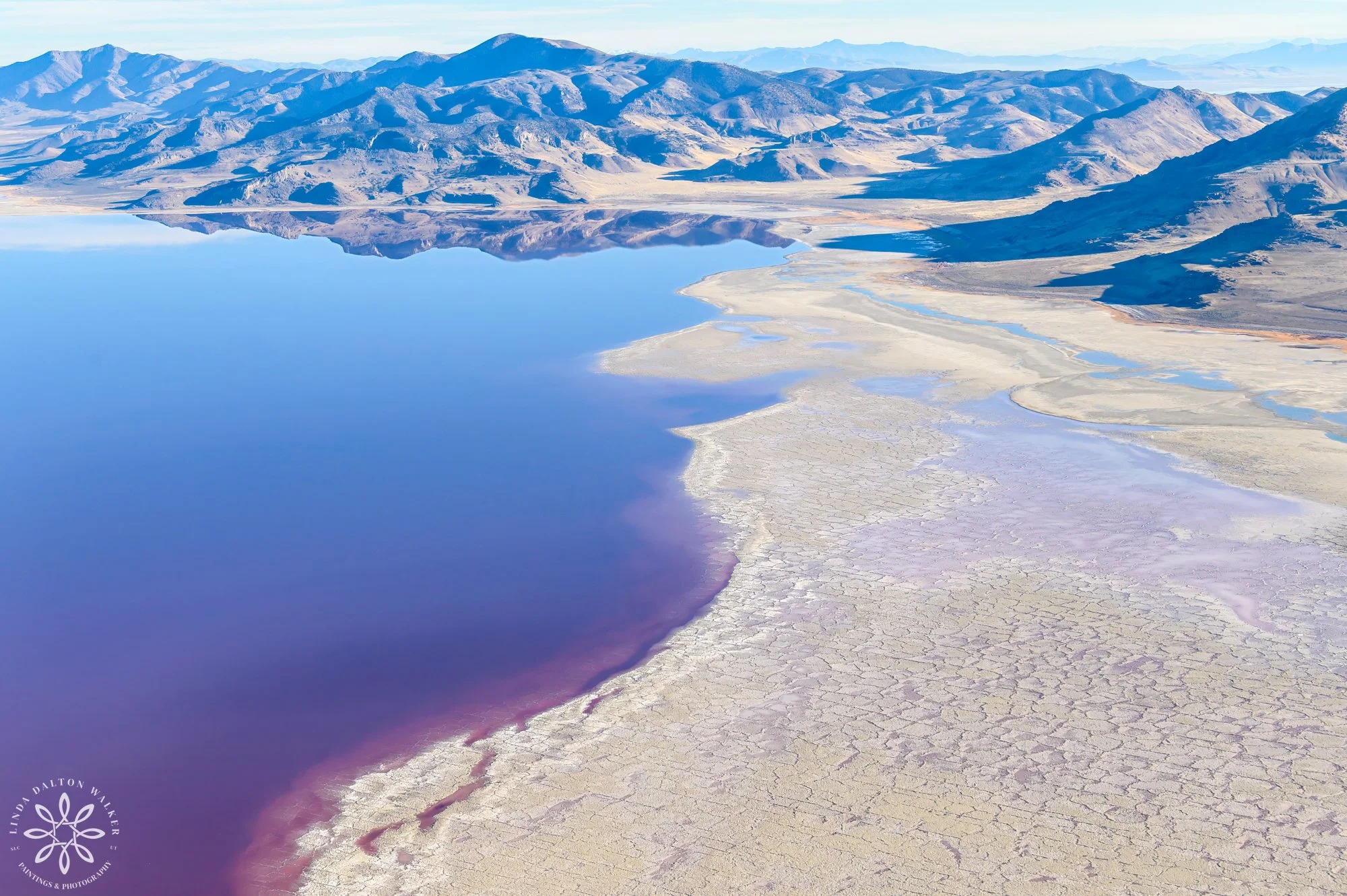
Promontory Mountain Range and North Chamber of Great Salt Lake. Taken with the window open.
I keep my camera locked into a harness system that drapes over my shoulders. This is crucial just in case I accidently drop it while walking, in an airboat, or flying in a Cessna with the window open. It’s a security I have come to understand is important.
The pink in the north chamber of Great Salt Lake is because the salinity is very high.
Many of our local governing officials would like this region of our lake to be completely cutoff, so it has been cut-off even further. This chamber of our lake’s heart is cut off from the southern chamber by the Lucin Cutoff and thereby has double the amount of salinity.
It is a terminal lake, so there is no outflow, and with the cutoff, there is no flow into the northern chamber from the southern chamber of GSL. Imagine our lake is alive, and imagine how this must feel to her. The death of one chamber of the heart is the beginning of the death for the rest. Everything is connected.
The high salinity in the north chamber creates a perfect environment for the salt loving microorganisms:
Halobacteria
Dunaliella Saline Algae.
They contain pigments that turn the water red or pink, and are able to survive in waters that are 30% or higher in salinity. Just as a comparison our oceans are about 3.5% salinity.

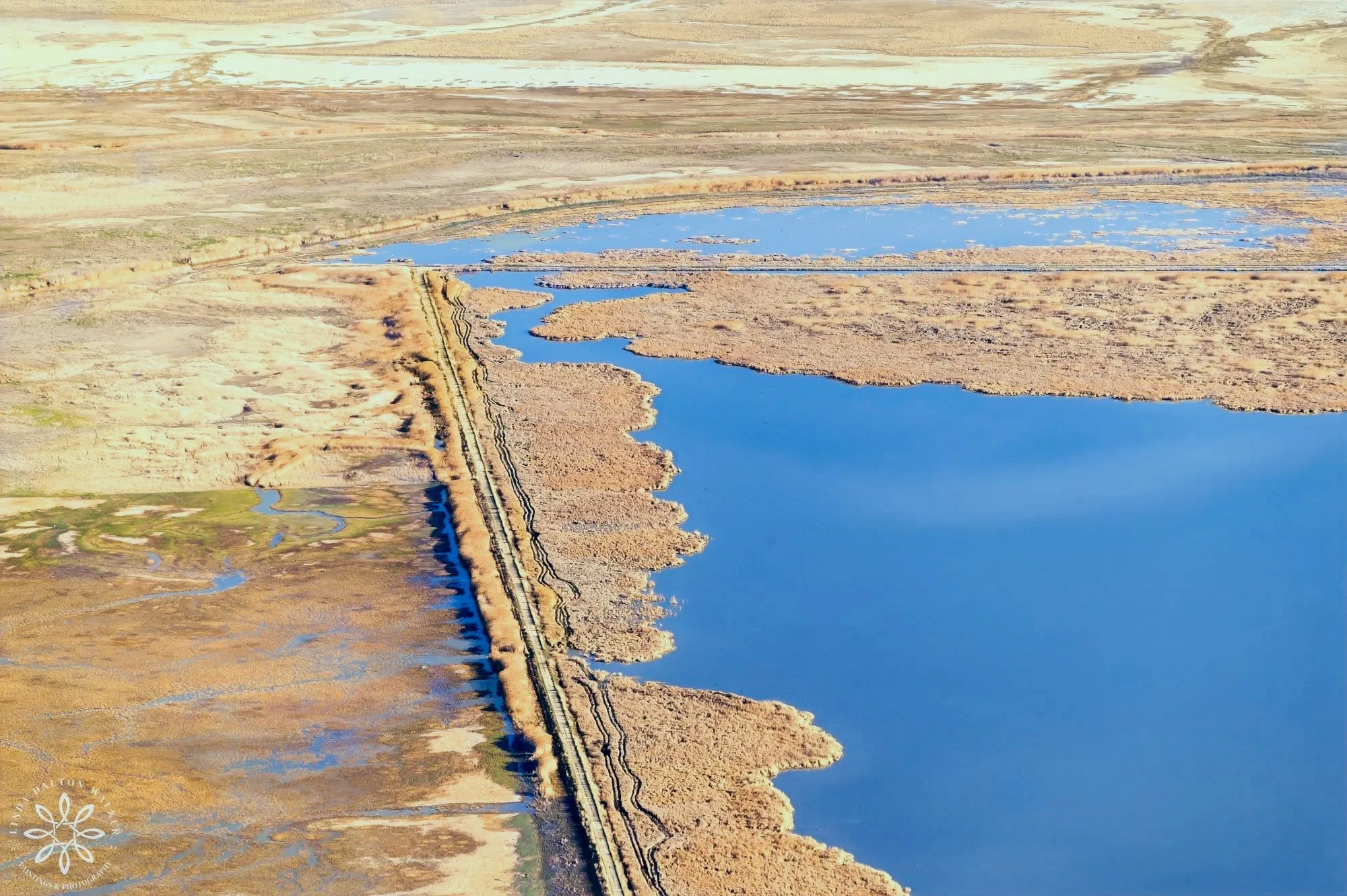
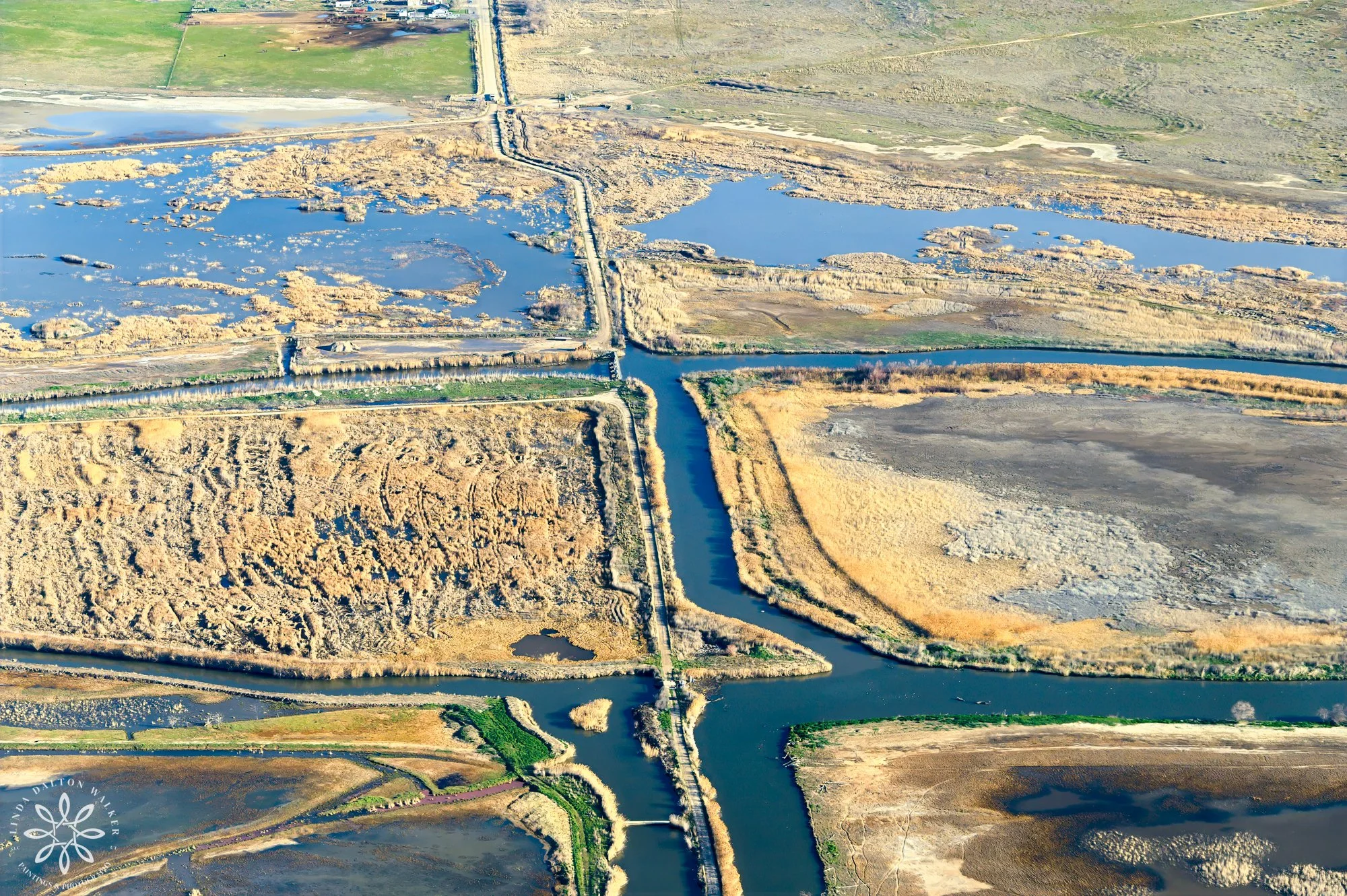
Traces of Mulch Mashers at work.
A Mulch Masher is a mowing machine which can move through shallow water and cut down unwanted plants. In these aerial views you can see the mowing lines of a Mulch Masher which has been removing the Phragmite plants.
The Phragmites are not an endemic species and they use double the amount of water as the native salt grass plants. The Phragmites have been taking over many of the wetlands of Great Salt Lake, thereby eliminating the salt grass, chocking out the water, and changing the habitat. There has been quite a bit of action to remove them. However, this action needs more funding.
Great Salt Lake is in an extremely fragile state, and does not look as robust as I recalled in my younger days. What if we gave her a right to flourish and reimagined a different ending and respected her existence. Imagine how she would look.
Environmental attention is needed, we need to pay attention, we need to restore what has been damaged, we already have the research necessary, now we need to take action to save her before it is too late - not in ten years, but now.
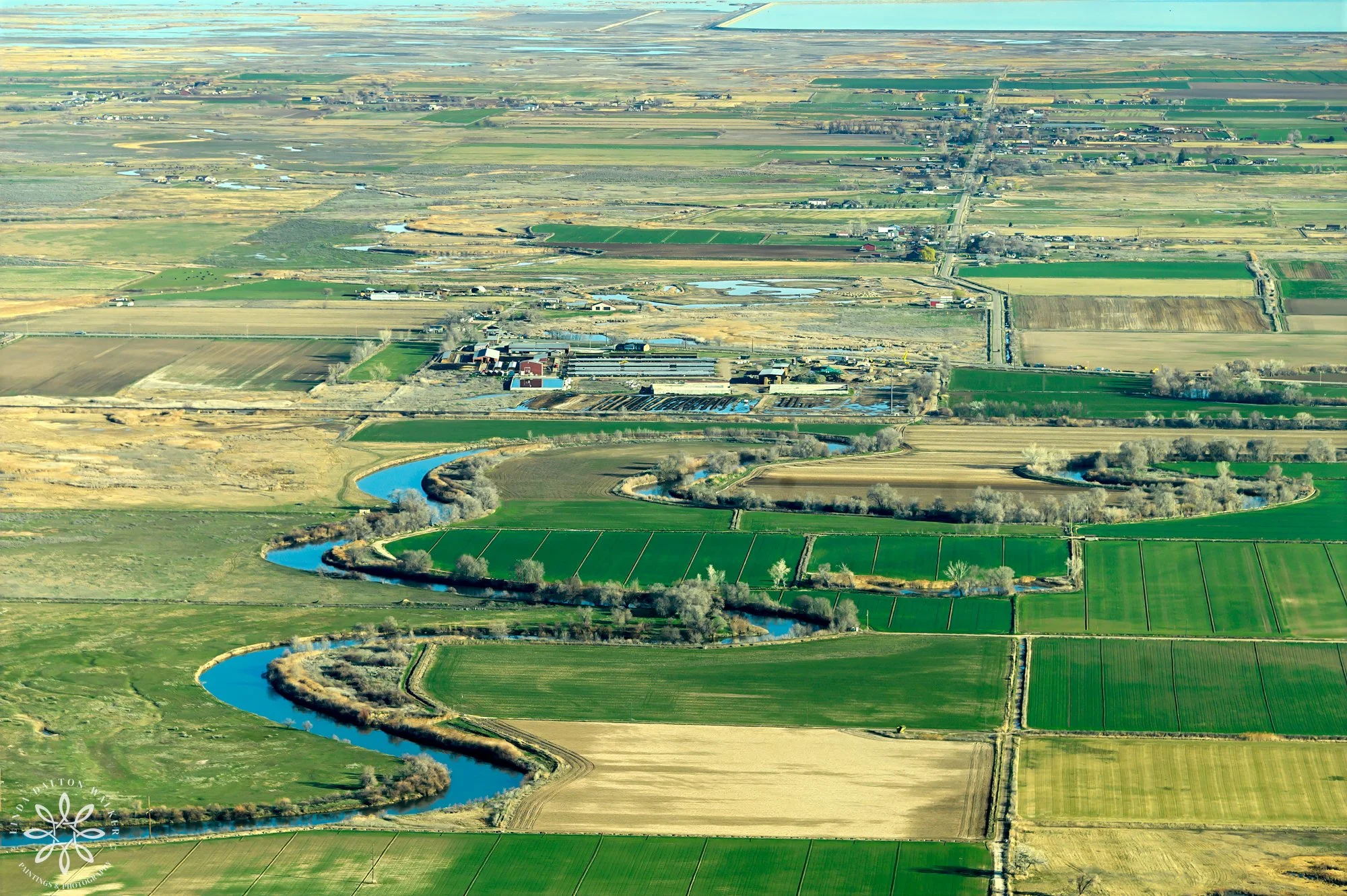
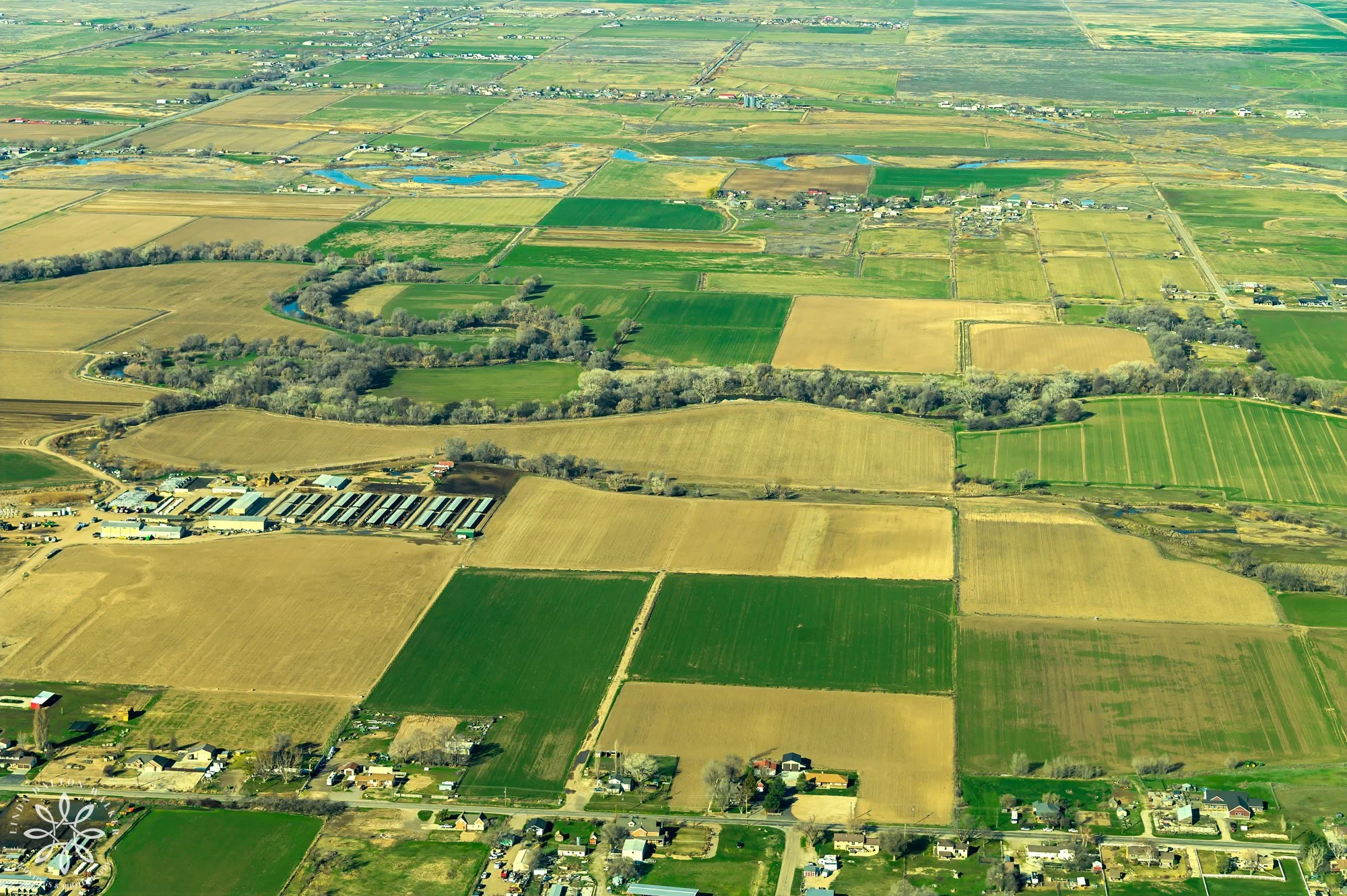
Looking down on GSL, the correlations between a person dying and a lake dying, seemed all too indistinguishable. The heart slows, circulation gets cut off, and there is a stagnation, a weakening that occurs. But, before we can think of a lake as dying, we need to think of a lake as alive, and as the right to be alive. Then perhaps we can reimagine a different future for her and us and our beautiful valley.

Looking south from Promontory Point onto Great Salt Lake
Great Salt Lake’s ecosystem is breaking down as observed by the fractured sections of water in this image.
Just as a person's heart slows and becomes blocked, a lake’s heart can become clogged with the excess algae and aquatic plant life and lose its vitality.
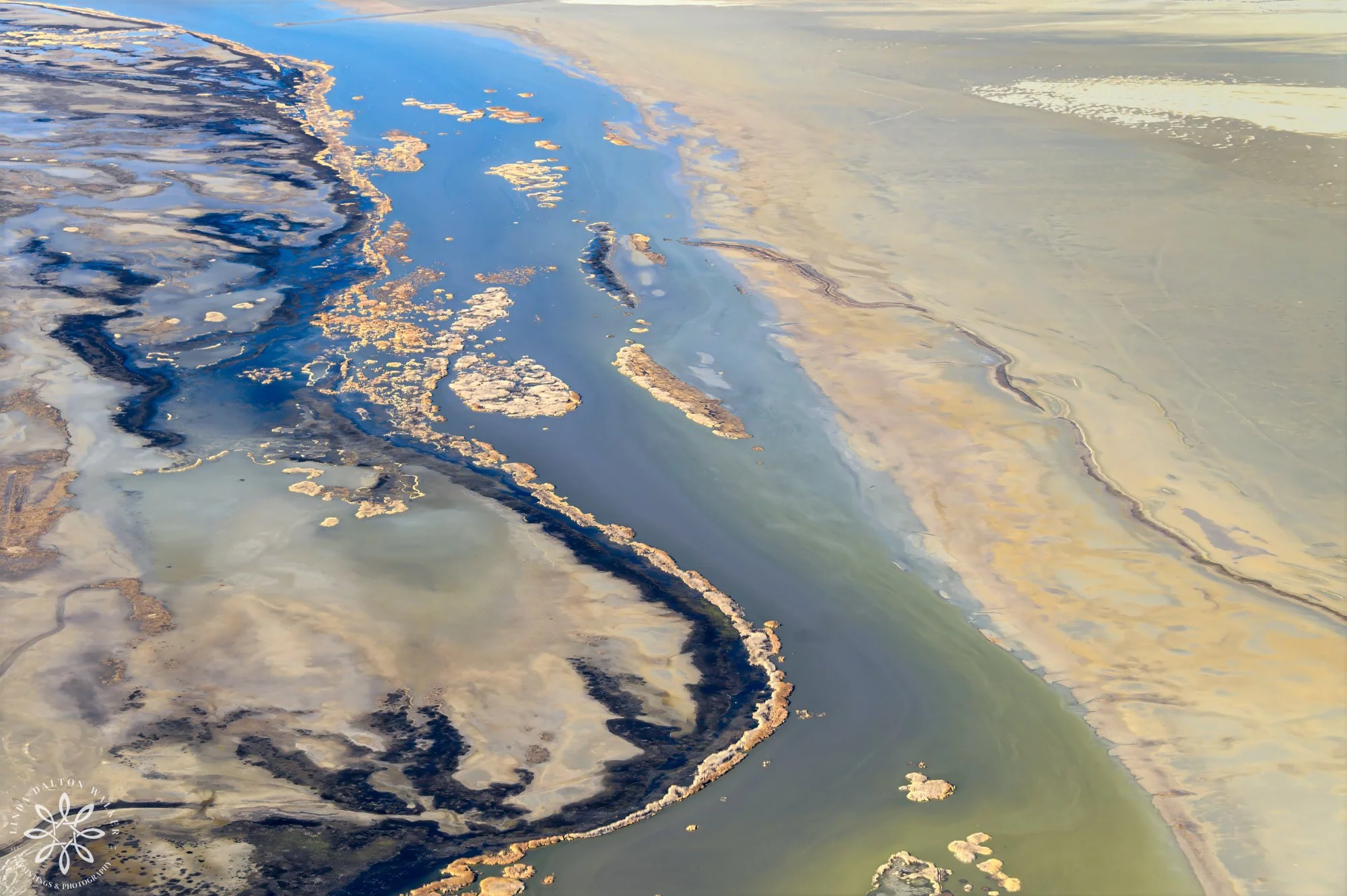
Textures in Great Salt Lake - Aerial views.
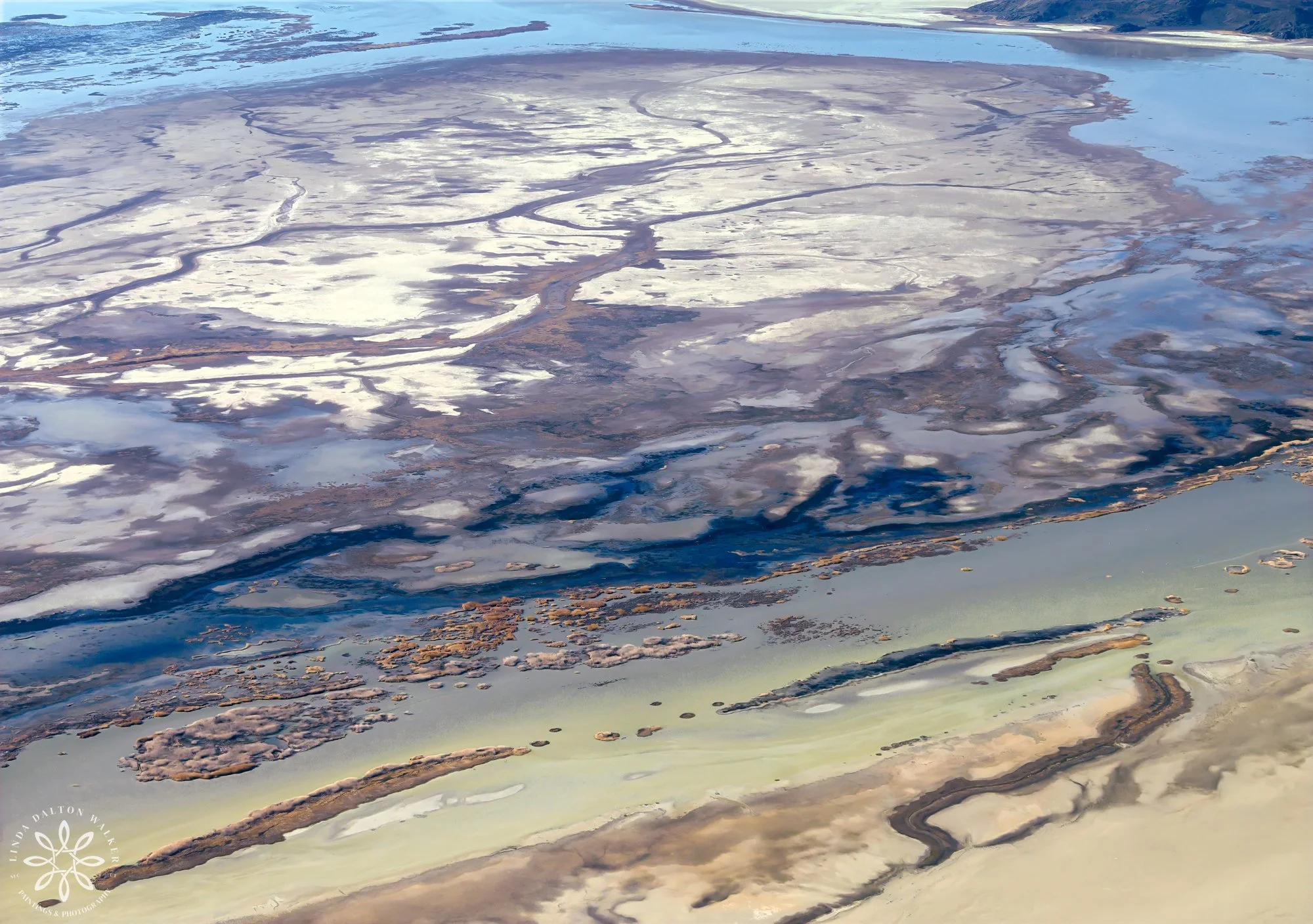
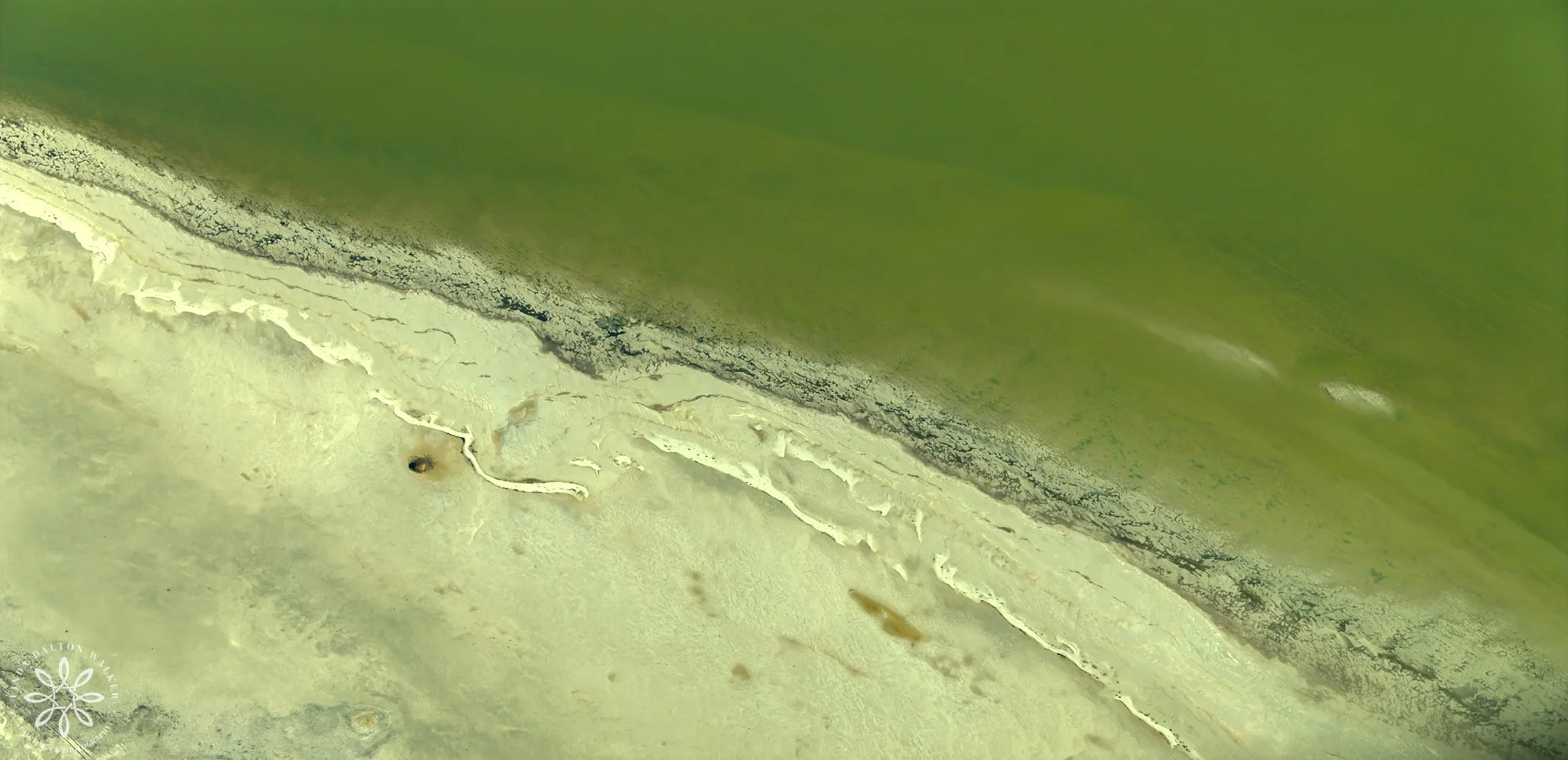

When a lake is dying she will turn green or brown through lack of circulation, much like a person’s skin will turn a blueish / gray color from the slowing of blood circulating through their system.
When this happens to a lake there is a buildup of organic material and sediment that can no longer be broken down quickly enough, so the lake becomes smaller, and more shallow until all that is left is a bog, the final decomposition of a fragile ecosystem.
As I looked out over Great Salt Lake from the Cessna, I felt as if I were looking more at a bog than a healthy lake. Our lake is listening and we are being watched by the birds. And they are wondering: Are they still going to have a home?
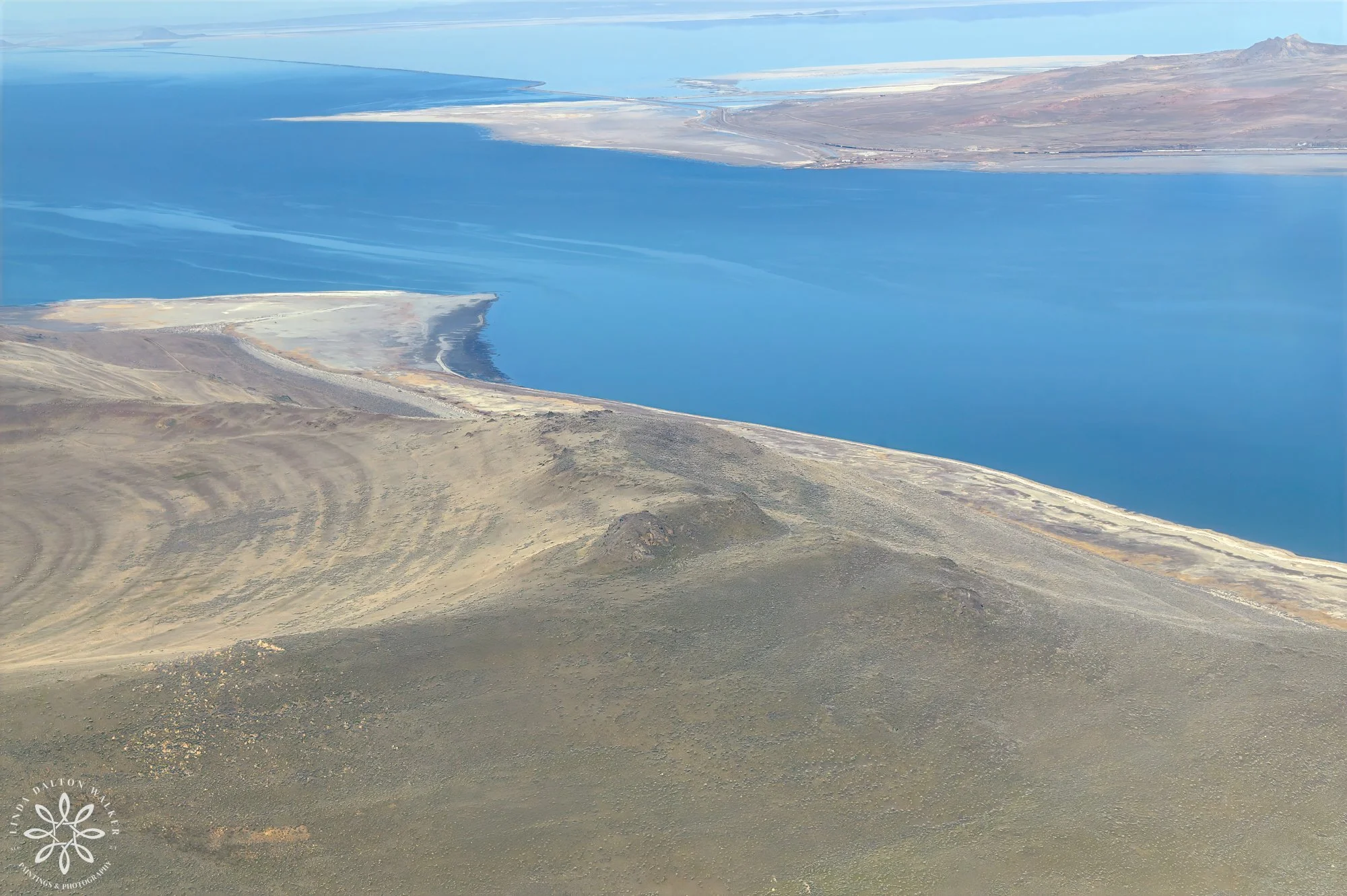
Aerial view of Fremont Island looking northward.
Loss of life, loss of a vital ecosystem destroyed through misuse, mistreatment, and mismanagement.

WHAT WE NEED TO DO:
When someone is terminally ill, people swarm in and give attention to what was long ago needed, often wondering if they could have done something sooner, and if they did would the person have survived.
This is much like Great Salt Lake, but in my opinion the wrong care has been given. Research only goes so far, action needs to be taken, not talk.
Let’s write a declaration together, a declaration of hope, a declaration of love, a declaration of survival. What would GSL want if she could speak, if she had rights like you and me and corporations? Where would we start then?

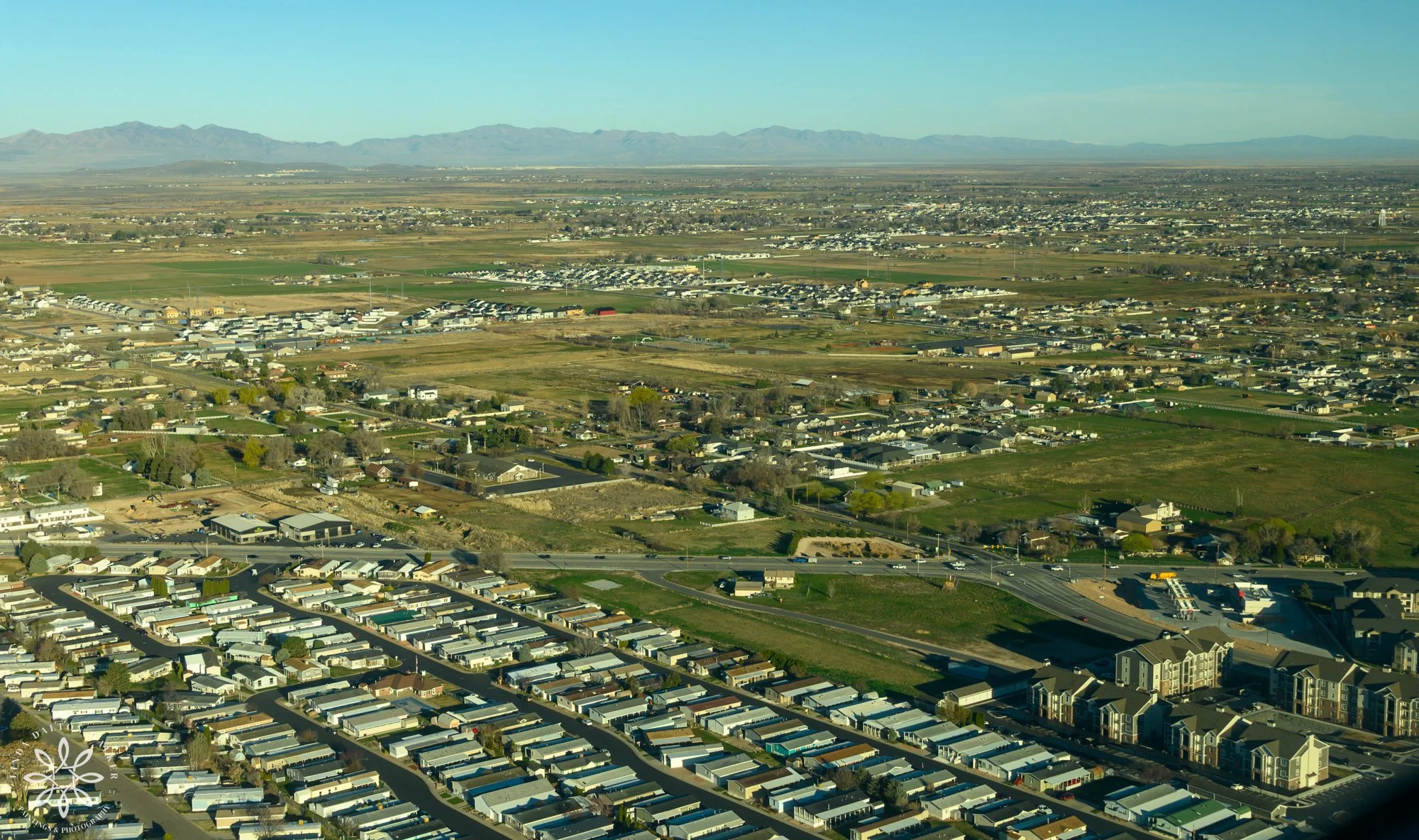
Just as when a person is dying, or a lake is dying, both need support - a person requires care to manage the transition from this life, where a lake needs human intervention and immediate care in order to survive. Let’s not let it be too late, and let’s start now.

In order for Great Salt Lake to survive, we need to pay attention, and do whatever we can to help. As residents of Utah, we cannot sit back and continue to consume water and use water as if we do not live in a desert. Think about what you can do, and be ever so vigilant with your usage - no matter how small, and for those of you not within our state but within the United States, continue to contact our governing bodies and let’s see what community actions we can get started together.
Conserving water to me is similar to backpacking. If I carry too much weight, I will certainly regret it a mile or two within my hike. At this point, I can only blame myself for bringing too much and not the terrain I have chosen, or I can eliminate and cut back on the items in my pack. In the long run, I will be happier with the results.
Just like in conserving water for Great Salt Lake, if we continue to use too much water, we will regret our overuse when we are dealing with a dust bowl, and the death of the millions of birds who are no longer able to survive because our lake is gone. But if we all cut back our water usage, and as a community are more water-wise, not pointing fingers and blaming, we just might still have Great Salt Lake and all of her species as well as our health. We are all bodies of water, and as a community we are stronger, but as individuals we can make a collective difference.
Notes about Great Salt Lake, Utah
Great Salt Lake is a terminal saline sea nestled in the valley of Salt Lake City. This glorious body of water is paramount for providing recreation and birding among other things. In addition, the snowpack Utah’s mountains receive are a direct reflection of the amount of water in our lake. The salt content within Great Salt Lake, creates the soft powdery snow people from around the world have come to love and associate with our ski resorts.
GSL is fed by three rivers, the Jordan, Weber, and Bear. These rivers are the arteries which feed the heart of our lake. Currently Great Salt Lake is 6.1 feet below the healthy level of 4, 196.85’.
When Great Salt Lake is full, she is 75 miles in length and 50 miles wide. She is a remnant of the ancient Lake Bonneville which existed between 23,000 and 12,000 years ago during the last glacial period. To her east are the Wasatch Mountains, glorious in their towering heights up to 12,000 feet. To the west are the Oquirrh’s, a much older mountain range, and therefore not as tall. Also to the west is the Stansbury mountain range.
There are many people at work doing everything they can to draw attention to Great Salt Lake with the hope that our lake will survive. Please join in this fight, and let’s make a difference together and create a different ending.
Final notes about my photography:
My camera selection is always a Nikon.
For this photo shoot, I used my D780 body, and the 28 - 300mm lens, so I could zoom in and out at a moment’s notice.
I photographed at high speeds because we were traveling at about 120 MPH.
Most of my shots were speeds of 1/2000 or 1/2500 sec, f/6.3, and the lowest ISO I could manage.
My count of shots ended up being over 130.
All of my images in this blog are available, please contact me if you are interested in purchasing any of them.
Thank you for reading and supporting my conservation efforts surrounding Great Salt Lake and her birds. Again, if you are interested in any of these image please CONTACT me and let me know.
Upcoming exhibit:
Red Butte Garden, SLC.
September, 2026.
Reception September 12th with a presentation beforehand.
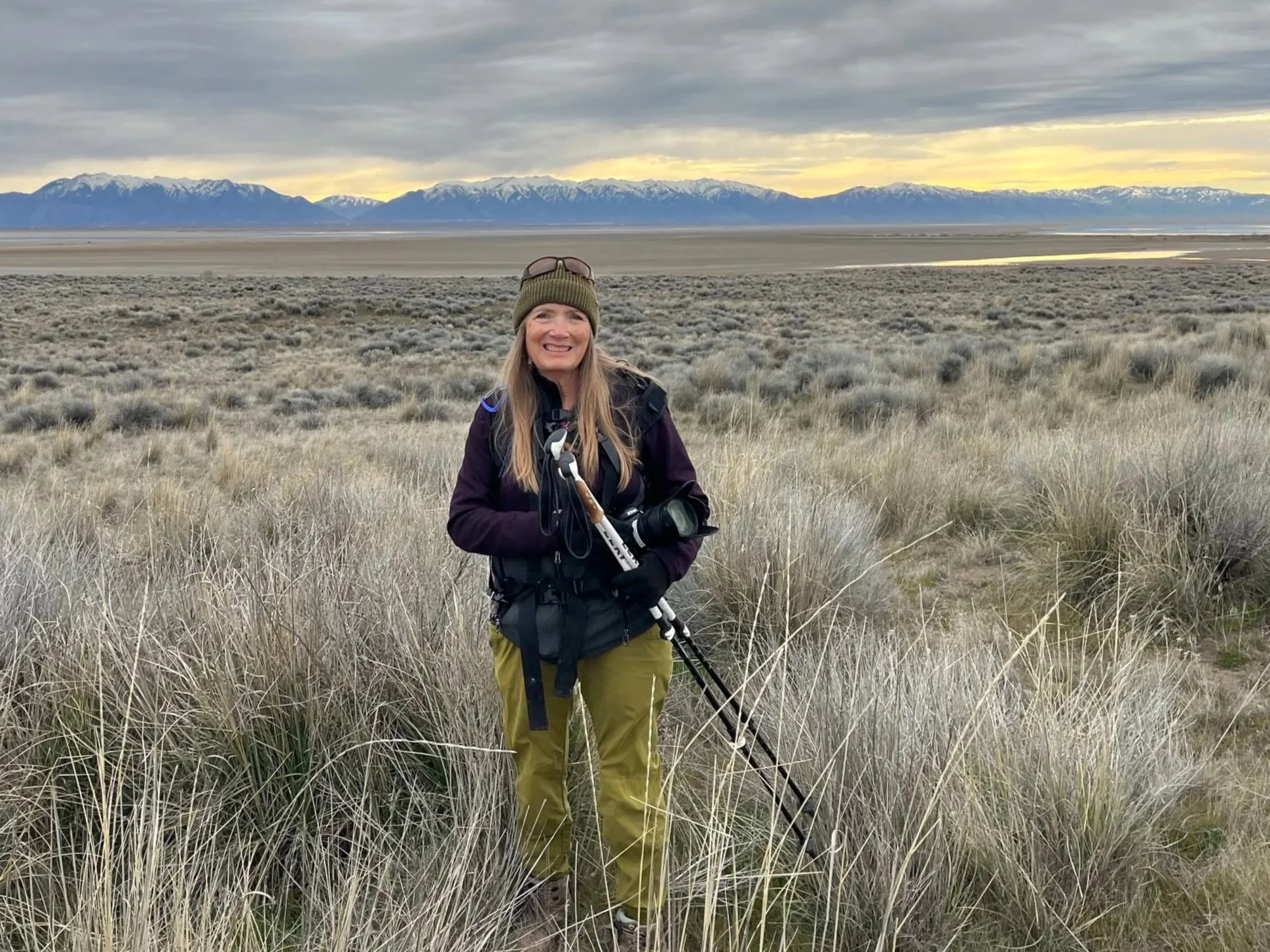
Thank you for supporting my conservation efforts. Let’s do what we can to help save our Great Salt Lake. Linda Dalton Walker
Image credit: Sue Halligan
“Ripples of change comes from throwing the first pebble.” - Linda Dalton Walker
Other Great Salt Lake Images can be found HERE.