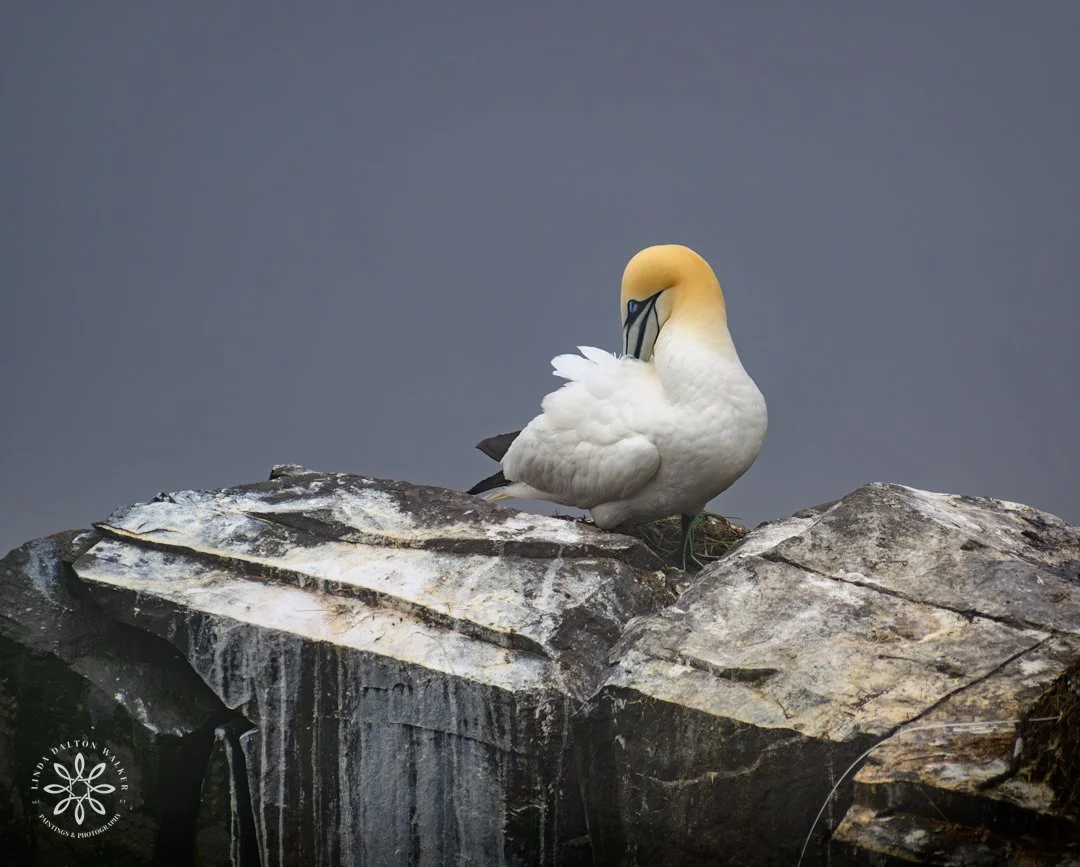
1. The Sensory Overload
We didn’t hit the heavy maritime weather during our drive, but the moment we drew close to Cape St. Mary’s Eco Reserve in Newfoundland, a thick fog suddenly rolled in and swallowed the coastal landscape. Stepping out of the vehicle alongside my close friends and our exceptional local guide, Corry Babcock, our visibility was instantly dropped to a mere tenth of a mile at best. Before we could even process the whiteout conditions, our senses were overwhelmed. The powerful, rhythmic blast of a nearby fog horn cut through the mist, accompanied by the pungent scent of a massive seabird colony and a deafening, chaotic chorus of thousands of vocalizing birds echoing out from the unseen sea stacks.
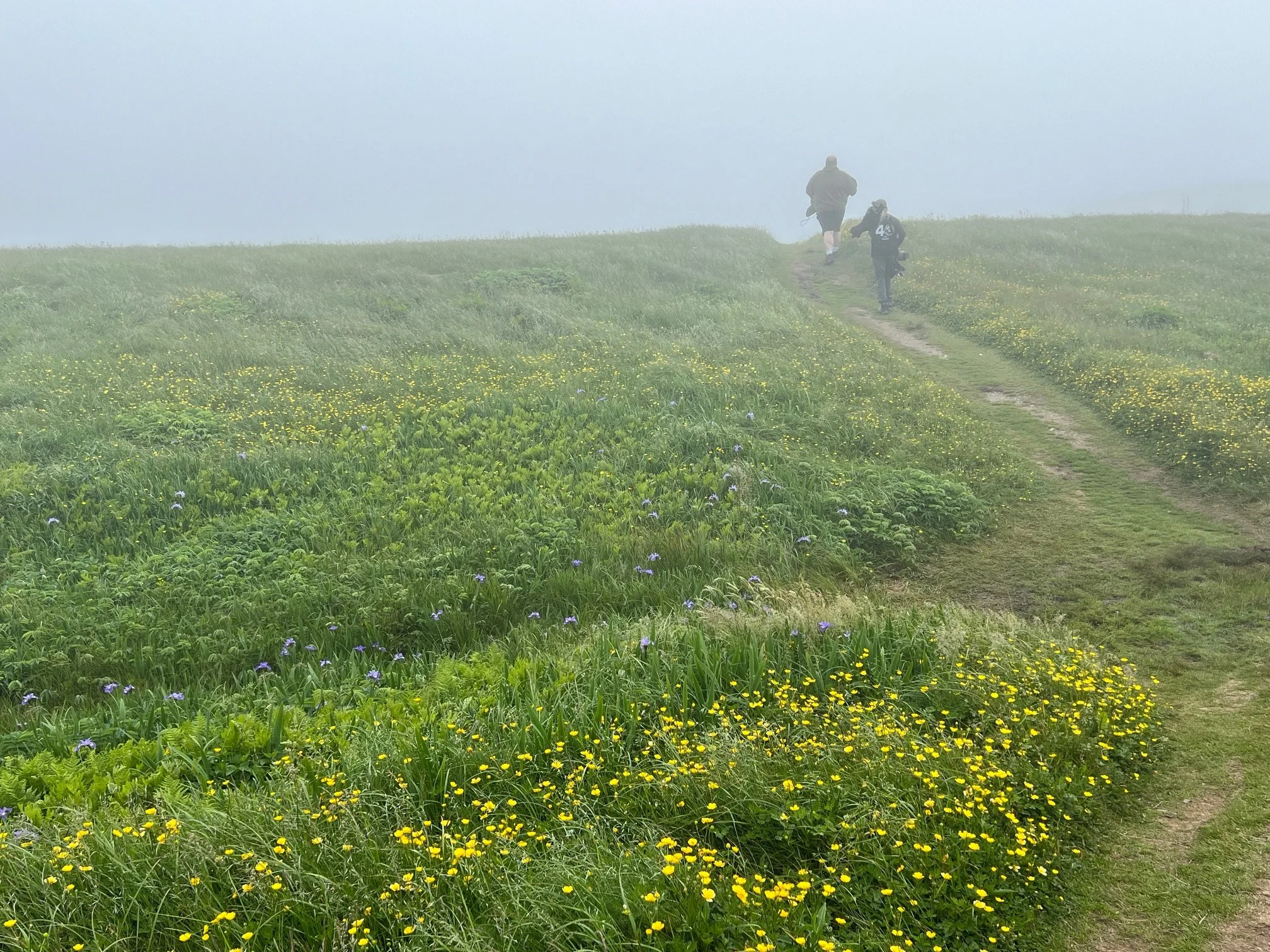
Walking the edge of the world. (Photo credit: Annie Barsky)
2. A Deceptive and Slippery Journey
Setting out across the green coastal fields, the trail quickly became rocky and treacherous, slick with the heavy moisture of the condensing fog. Corry walked with us, navigating the conditions and safely driving us everywhere throughout our entire Newfoundland expedition. As we neared the nesting grounds, Corry gave us a kind, protective warning, wanting to ensure we would be okay. He explained that the cliff sides here are highly deceptive, covered in lush greenery that looks like solid ground but can easily mask a hollow drop-off.
Despite his thoughtful warning, navigating the terrain with heavy logistical gear—carrying a tripod while managing a camera strapped to a body harness—is incredibly tough to deal with. Distracted for just a split second by my equipment, my foot lost traction on the slick rocks and I began to slip toward the edge. It was a terrifying moment that easily could have been fatal, but another photographer standing nearby quickly lunged forward and grabbed me. It was a heart-pounding lesson in the absolute unpredictability of field photography and the deep respect this raw environment demands.

Getting down to eye level safely in the mist with friends. (Photo credit: Corry Babcock)
3. The Creative Challenge: Fighting the Fog
Shaken but safe, I realized the most secure and effective way to work was to sit firmly on a solid rock structure a safe distance back from the crumbling edge. From this anchored position, the real artistic challenge began. Colony photography can easily result in a chaotic, messy landscape where the viewer's eye gets lost in a sea of busy details. To make matters more difficult, cutting through the dense, heavy fog with a long lens required intense technical focus. The raw files completely lacked contrast, requiring meticulous post-processing later in the digital darkroom to lift the hidden shapes and details out of the blinding gray mist.
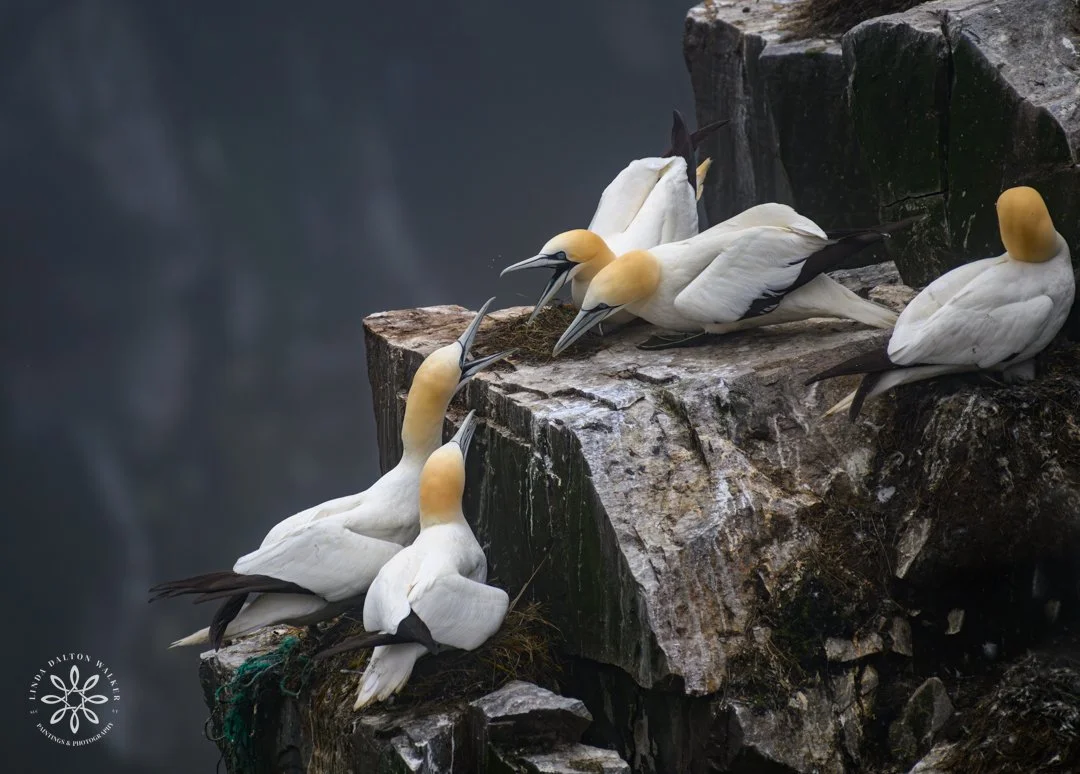
We stayed out on the cliffs for three hours, but the time flew by as I lost myself in the environment. Patiently waiting from my rock perch, I watched individual birds emerge from the whiteout, flying in with rocky nesting material clamped tightly in their bills to drop down into a crowded city of hundreds of squawking neighbors. Here and there, tiny baby chicks peeked out from beneath protecting wings, adding a fragile layer of life to the bustling rock faces.

Navigating the crowded, chaotic nursery of the sea stack. Contact me to purchase.
4. The Climax: A Tender Touch at the Epicenter
Amidst that immense avian pandemonium, I slowed my breath and purposefully began to search the crowded ledges for a singular story. That was when I locked my lens onto a specific couple. Right there, in the epicenter of absolute, deafening noise, blowing fog horns, and swirling wind, these two Northern Gannets completely tuned out the world around them. They came together and began to tenderly rub their beaks—a quiet, profoundly gentle moment of pair-bond connection that stood in complete contrast to the chaos surrounding them.

A hidden moment of absolute peace frozen in the mist. Contact me to purchase a print.
Frequently Asked Questions
When is the best time of year to see the gannets at Cape St. Mary’s?
Northern Gannets arrive at Cape St. Mary's Ecological Reserve in May and stay until mid-to-late September to breed. For the most action—including courtship rituals and parents feeding chicks—the best time to visit is late June through August.
How long is the hike to Bird Rock at Cape St. Mary's?
The hike from the Interpretive Centre parking lot to the main Bird Rock viewing area is a 1-kilometer (about 0.6 mile) walk over open, cliff-top barrens. It takes about 15–20 minutes each way, but visitors should watch their footing as the path can be slippery, muddy, or shrouded in dense fog.
What camera lens is best for photographing gannets at Cape St. Mary’s?
Because Cape St. Mary’s is North America’s most accessible seabird colony, the gannets on Bird Rock are incredibly close (often just 10 to 20 meters away). A 70-200mm or 100-400mm zoom lens is ideal for capturing environmental shots and tight portraits. A longer telephoto prime lens (like a 500mm or 600mm) is excellent for isolating action and flight shots across the chasm.
How do you handle the frequent fog when photographing at Cape St. Mary’s?
Cape St. Mary’s averages over 200 days of fog a year. Instead of fighting it, use the fog to your advantage! It creates a beautiful, diffused natural light box that eliminates harsh shadows and adds a moody, ethereal atmosphere to your wildlife portraits. Just keep a microfiber cloth handy to wipe moisture off your lens element.
Explore the Rest of the Newfoundland Gallery
Below is a collection of additional moments captured alongside Corry and my friends during our unforgettable trek through the fog.