Patience on the Peninsula: Photographing Atlantic Puffins in Bonavista
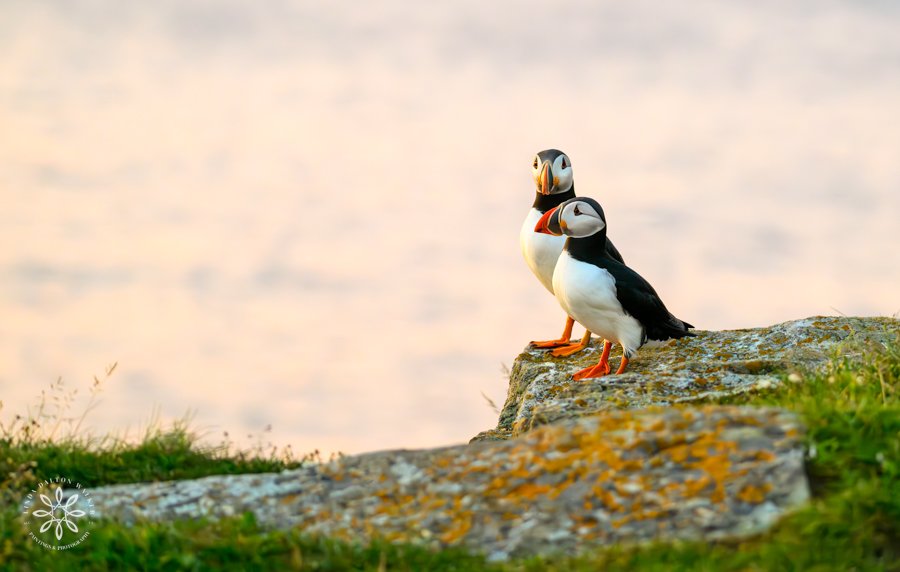
A mated pair of Atlantic Puffins with the glow of the sunrise on them. Available on my website Here.
Introduction: A Shift in Pace
My last blog post described my adventure photographing the Northern Gannets enshrouded in dense fog, so you already have an idea of just how dramatic and intense the Newfoundland coastline can be. During that same wildlife photography trip, a couple of years ago, I traveled further into this rugged terrain and an entirely different landscape unfolded before me. I left the crowded, noisy gannet colony behind and headed toward the Bonavista Peninsula to photograph the smaller, utterly adorable Atlantic Puffins.
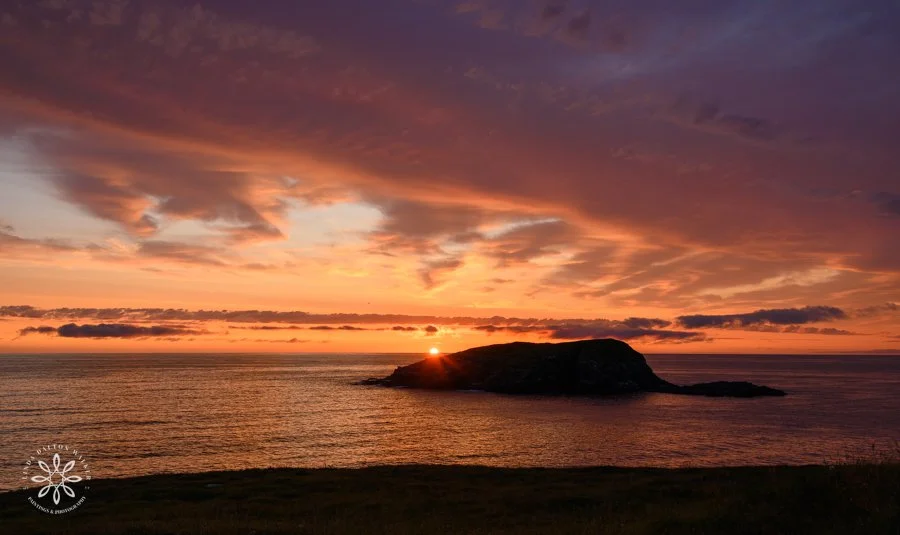
Sunrise, Bonavista Newfoundland. Available on my website here.
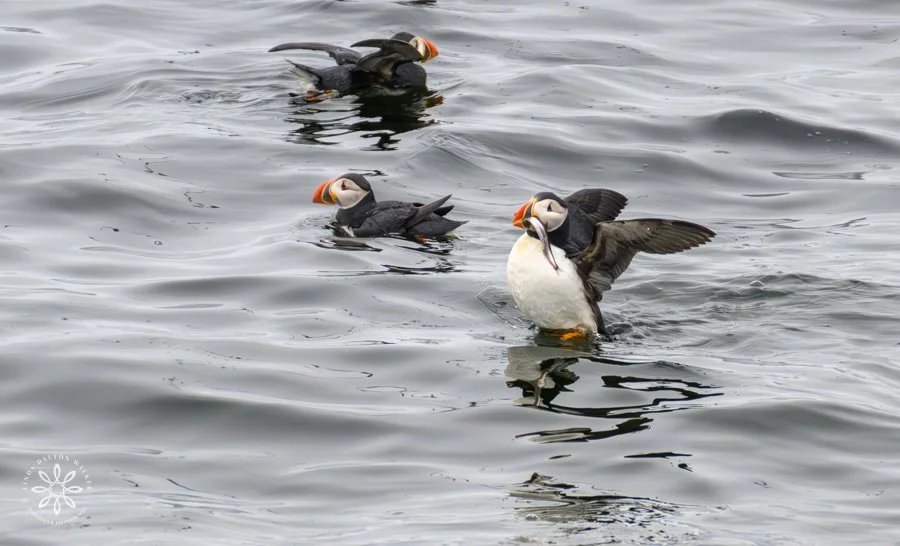
These puffins are so entertaining to watch, and their vibrant coloring brings me pure joy. With their brightly colored beaks, expressive eyes, and frantic movements as they take flight, they offered a completely different photographic experience compared to the gannets.
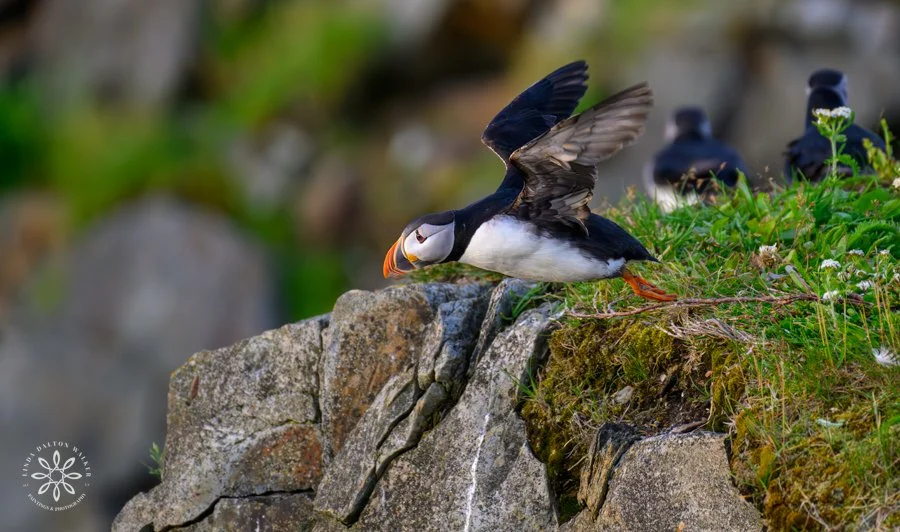
Atlantic Puffin taking flight. Contact me to purchase.
The Strategy: Ethics and Immersion
Photographing wildlife is always a delicate dance between getting the shot and respecting the animal. When I arrived at the nesting sites in Bonavista, I made a conscious decision to choose just two spots and stay there. The evening before, we scouted out the area and noticed many tourists with cell phones getting far too close to the birds. However, the morning we arrived for the shoot, there was just a sprinkling of photographers who moved slowly and sat quietly, deeply respecting the moment.
Rather than moving around and risking disturbing the birds as they tended to their burrows and gathered nesting grasses, I chose to let them come to me. By settling into a fixed position, I became just another part of the landscape. Over time, the puffins grew comfortable with my presence, allowing me to witness and document their natural behaviors, from greeting their mates to guarding their nesting ledges.
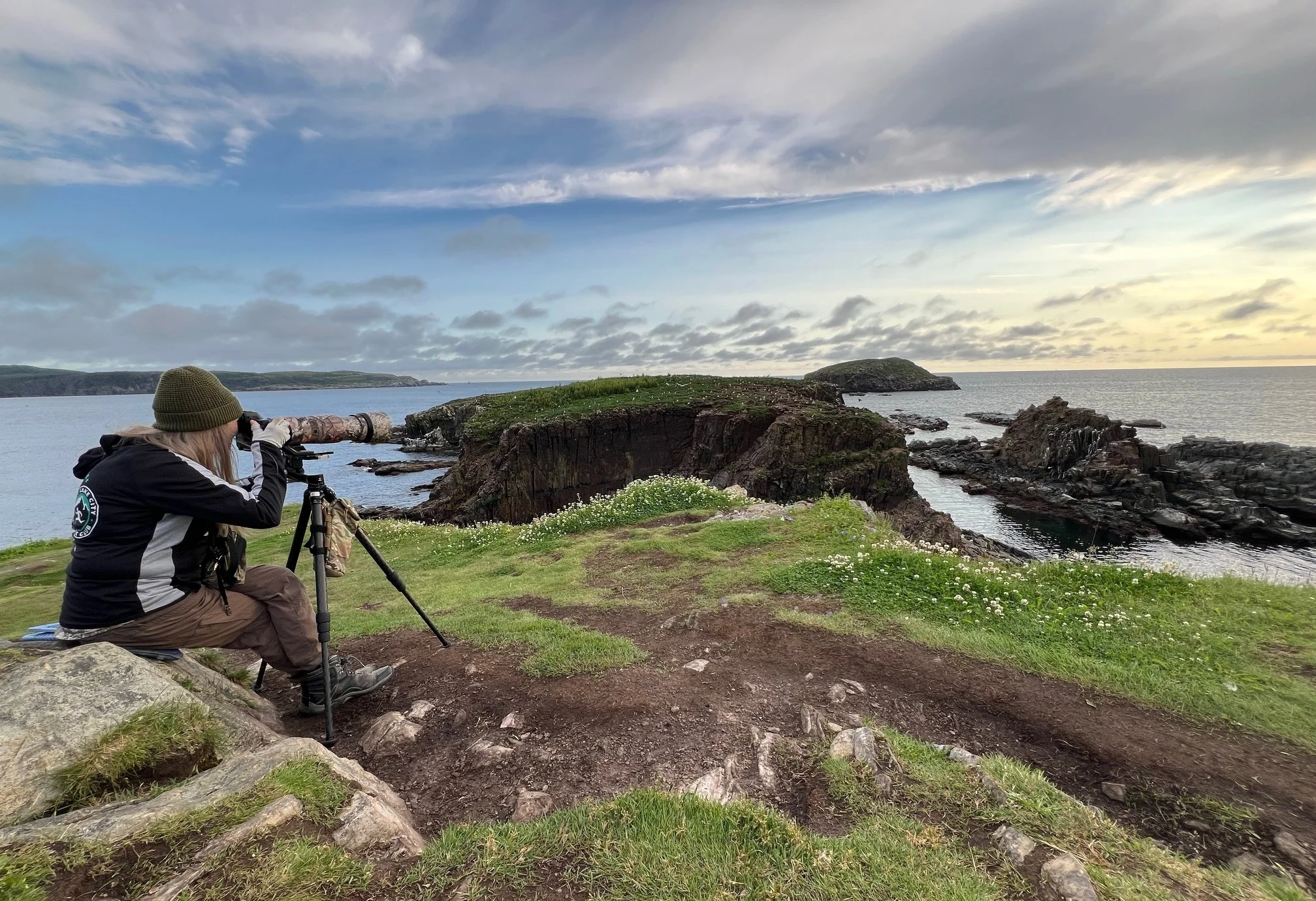
Linda sitting quietly on a rock to photograph the puffins. The nesting colony is in the distance. PC: Annie Barsky
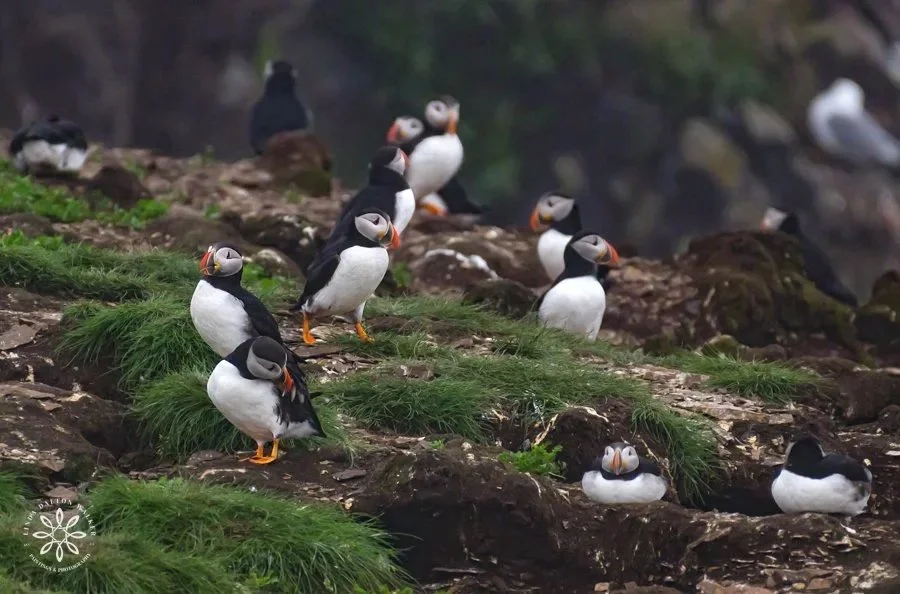
Zoomed in and cropped image of nesting burrows. Contact me to purchase.
As I was focusing on the puffins across the landmass in their nesting rookery over the water, I sensed something close to me. I slowly turned my head and noticed a puffin a mere 10 feet away. Keeping my movements minimal, I gently panned my camera, which was securely fastened on a gimbal head, and captured this adorable bird gathering grass to take back to its nest. It is an intimate moment I will always treasure.
Linda's Pro Tip: When photographing sensitive nesting colonies, patience is your best piece of gear. Pick a spot with a good angle, sit still, and let the wildlife come to you.
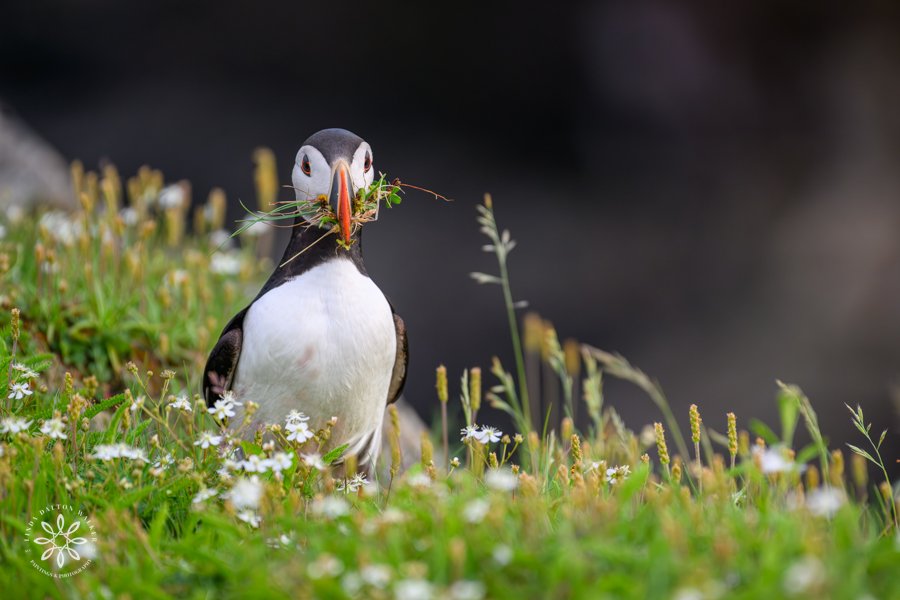
Atlantic Puffin gathering nesting material. A mere 10 feet away from me. Purchase on my website - here.
The Gear: Reaching Across the Chasm
Because I was committed to staying back to protect the puffins, I needed serious reach to photograph them across the chasm onto their steep nesting sites.
Here is what was in my kit:
Camera: Nikon Z8
Lens: Nikon AF-S FX NIKKOR 200-500mm f/5.6E ED VR
Support: A sturdy Really Right Stuff tripod (an absolute necessity for cutting out wind vibration on the exposed Bonavista cliffs and being able to capture the early morning light) with a Really Right Stuff Gimbal Head for smooth flexibility.
Comfort: A nice cushion to sit upon! Most of my shots were taken from a sitting position so I could achieve intimate, near eye-level compositions.
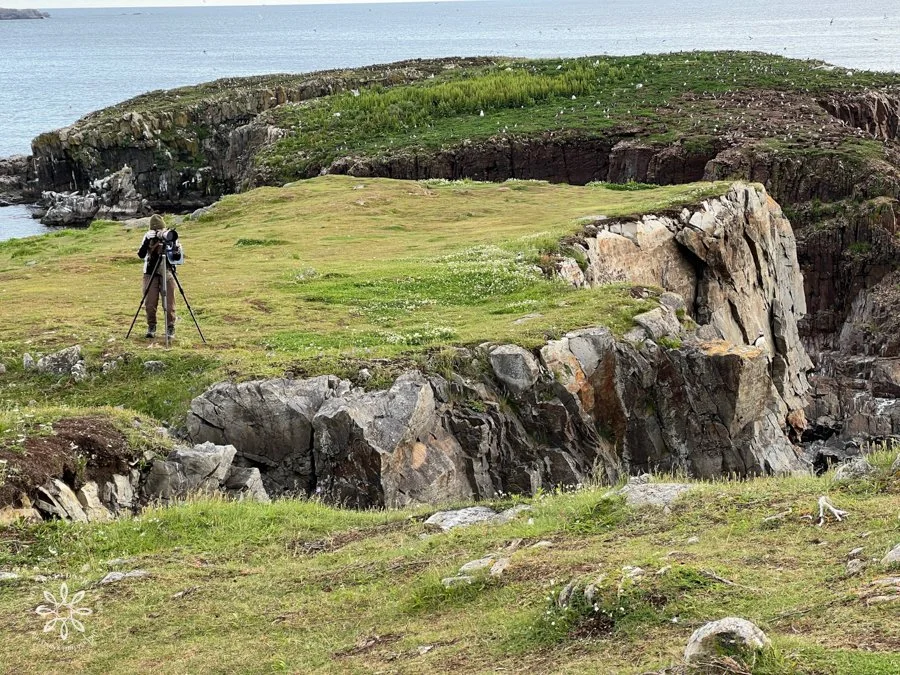
Linda photographing the puffins flying from the distant rocky edge. PC: Annie Barsky
The 500mm reach allowed me to isolate individual puffins perched on distant rocks, capturing the incredible textures of their feathers and the brilliant orange of their feet. Meanwhile, the versatility of the zoom meant that when that curious puffin decided to land much closer to my position, I could quickly pull back to frame the shot perfectly.
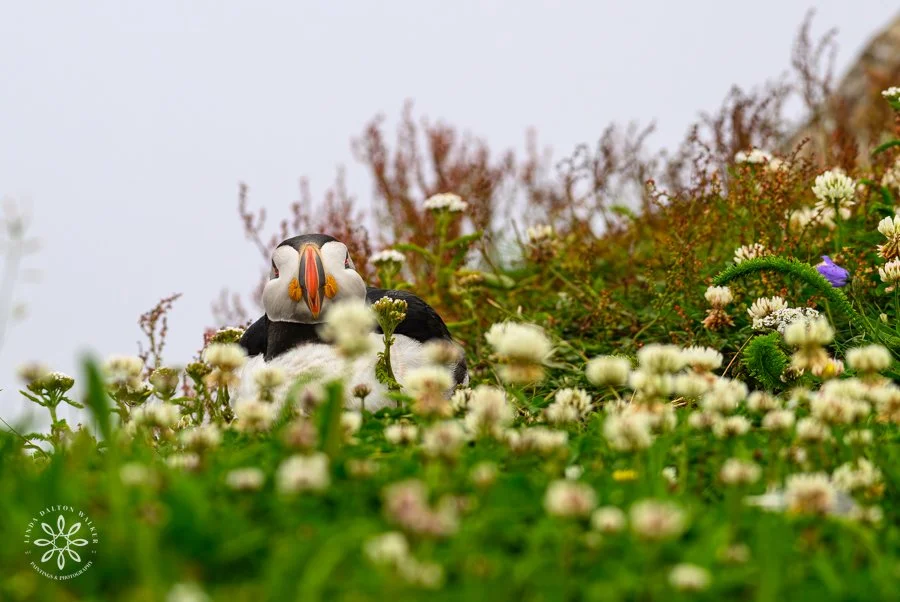
The Nikon Z8's animal detection autofocus was a game-changer here, locking onto those expressive puffin eyes even against the distracting, chaotic backgrounds of dark jagged rock faces and the fields filled with grasses and delicate flowers.
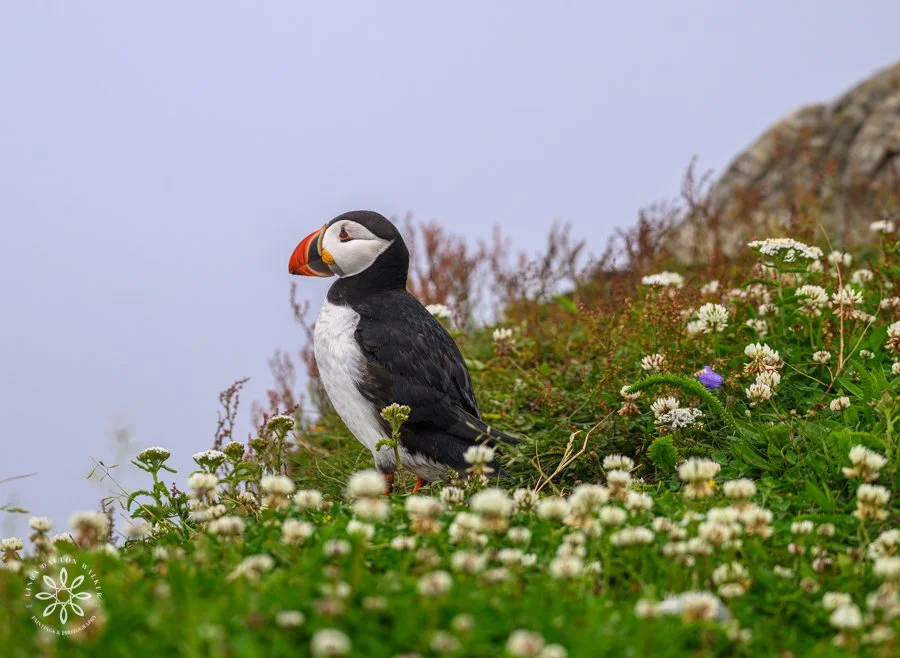
Puffin standing in a field of flowers on a rocky edge. Contact me to purchase.
Reflections Two Years Later
Looking back at these frames a couple of years later, I am reminded of why I fell in love with wildlife photography in the first place. It isn't just about the final image; it’s about those quiet hours spent on the edge of the continent, a time when I could slow down and breathe, a time when I just had to listen to the gentle wind and watch life unfold on the cliffs.
The puffins of Bonavista reminded me of my mantra that the best way to get closer to nature is to simply stay still.
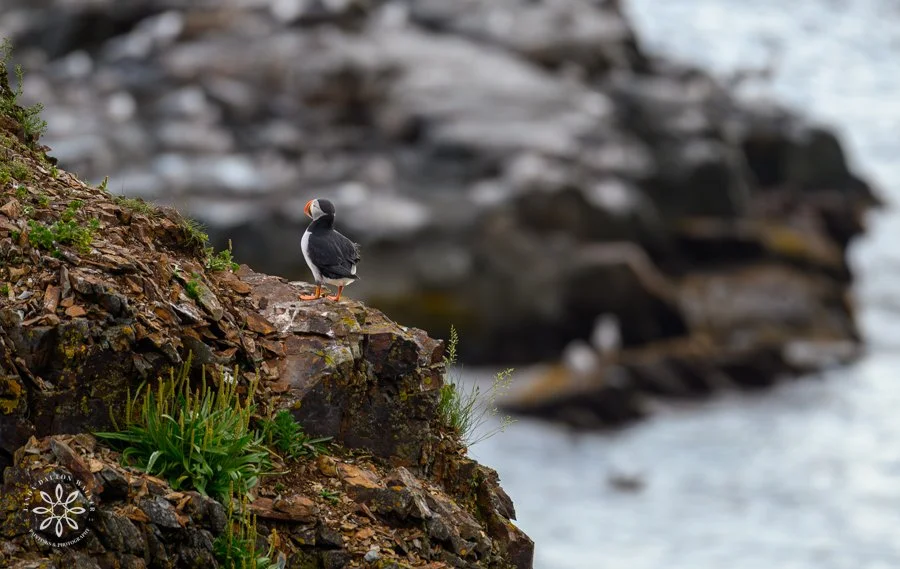
Puffin in a quiet moment on a rocky ledge. Purchase on my website - here.
Frequently Asked Questions
Where is the best place to photograph puffins in Bonavista? The best viewing and photography spots are near the Bonavista Lighthouse and the Elliston Puffin Site (just a short drive away), where the birds nest on close-shore rock stacks.
What is the best time of year to see puffins in Newfoundland? Puffins arrive in Newfoundland in mid-May and stay until late August or early September to breed and raise their chicks (puffling season).
Do I need a tripod for photographing puffins on the peninsula? Yes. The Bonavista Peninsula is notorious for high winds. A sturdy tripod, as well as a gimbal head for tracking the birds' fast flights, is highly recommended to prevent motion blur.
About the Photographer
Linda Dalton Walker is a wildlife and nature photographer dedicated to capturing the raw beauty of the natural world while advocating for the ethical treatment and conservation of its inhabitants.
Connect on Instagram: @lindadaltonwalkerart