Are there Flamingos in Sicily, Italy?
And Where To See Them
The pull of Italy for me as a photographer is strong, this was my fourth trip there, and each time I have been to a different location with completely different experiences.
A year ago I started planning my 2026 photography visit with Italian Guide, Mauro Riva, who I have had as a guide in the past. This year was to be totally different, it was to be a private tour to celebrate a milestone birthday, and I wanted three friends to join me. My first focus of the trip was to photograph wildlife, so we started looking at the Dolomite region. Then our focus changed to birds, and then to Sicily. I have wanted to photograph the Greater Flamingos for a very long time, and they were going to be in Sicily during my birthday. The flamingos had been a rare sighting in Italy before 2000, when suddenly they started to migrate and stay over in Sicily. Mauro joined forces with nature expert and guide Gabriele Lonzi, and we were now set with two guides.
We were very spoiled by Mauro and Gabriele, and this ended up being the best trip I have ever been on. It is a birthday I will always remember, and I will be writing several blogs sharing all of the various adventures I had during this journey. It was transformative, and I opened in ways I never thought possible - I haven’t laughed or cried this much in a very long time.
In this Blog you’ll discover:
Where to see them: Where can you find and photograph Greater Flamingos in Sicily?
Bird behavior: How do Greater Flamingos breed and feed in local wetlands?
Conservation: What environmental threats do these flamingos face?
Field tips: What should you expect when photographing flamingos in wetland reserves?
Custom Art: How can you commission or purchase a Greater Flamingo print?
Vendicari Nature Reserve (Riserva Naturale Orientata Oasi Faunistica di Vendicari) in southeastern Sicily was our first location.
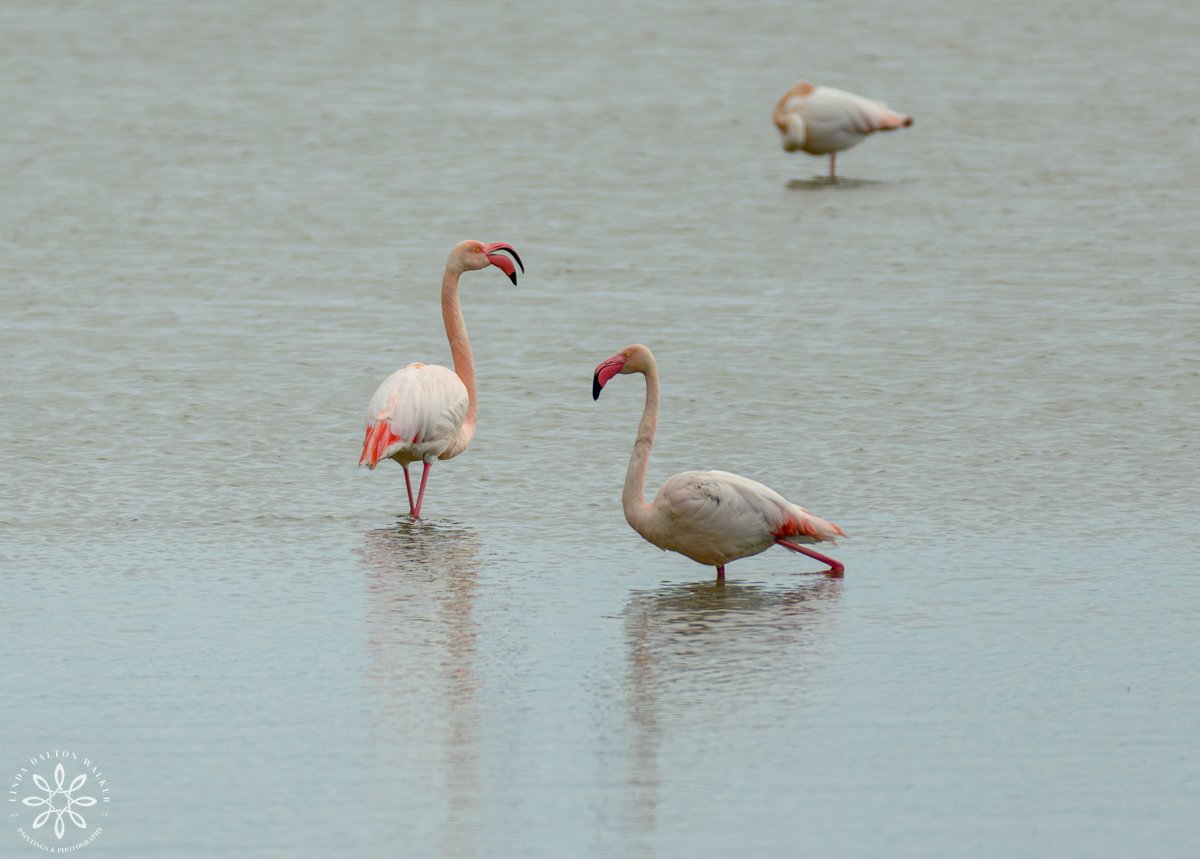
The Greater Flamingo is only found in Africa, western Asia, and southern Europe. Typically they are found around shallow, saline and alkaline wetlands, and coastal lagoons during breeding season. When they come to Italy in the spring, they are on their migrational flight from Africa (specifically -Tunisia ) and stop over in Sicily to breed and raise their little ones before their flight to Spain.
Our first location on this reserve had two different blinds with small holes to photograph through. We then walked to another blind, where we were able to photograph a bit closer. If we would have had time there were other locations. It is a place where I would stay a week and come back every day to see what changed or not.
Establishment and Wildlife of Vendicari Nature Reserve
The nature reserve was originally planned in 1981, but it took three more years before it was officially established as a protected reserve. There were numerous struggles of the environmental groups to ensure the area was protected, and many more bureaucratic steps that had to be followed.
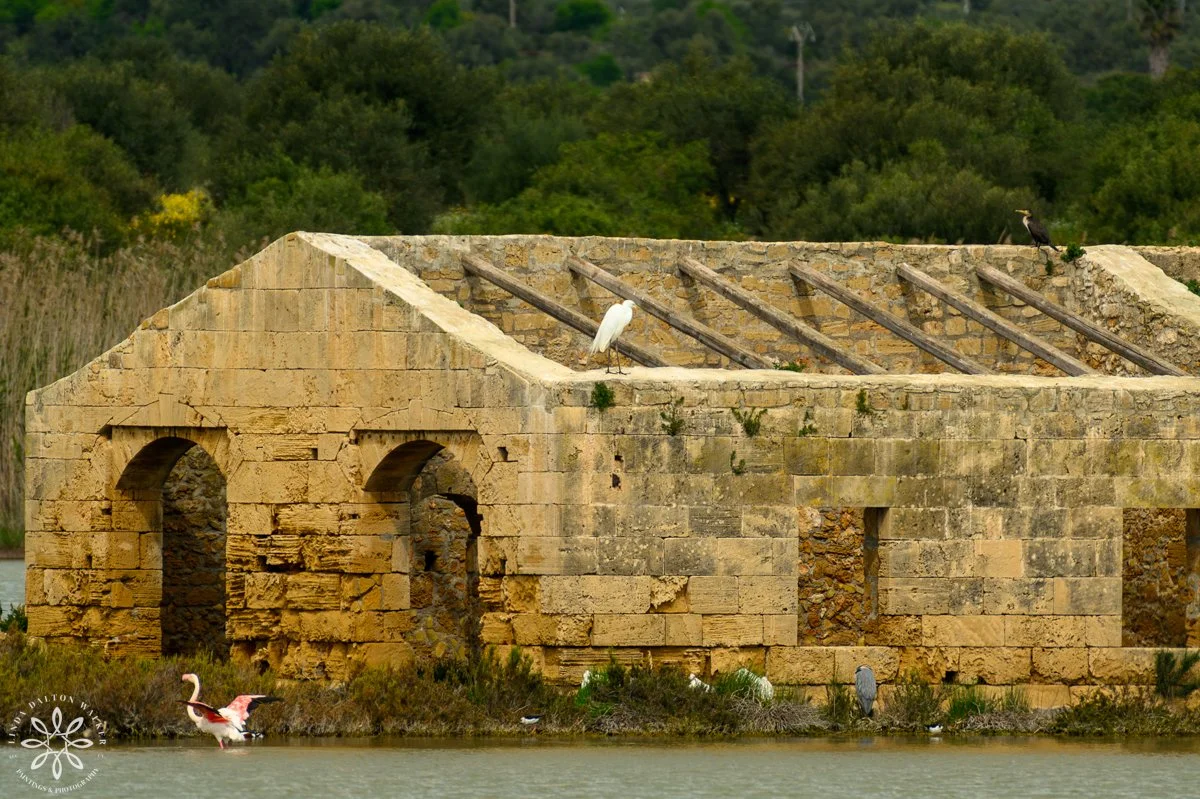
In this image, note the Greater Flamingo, Great Blue Heron, Great Egret, Cormorant, Black winged stilt, and Little Egrets that I photographed through blinds.
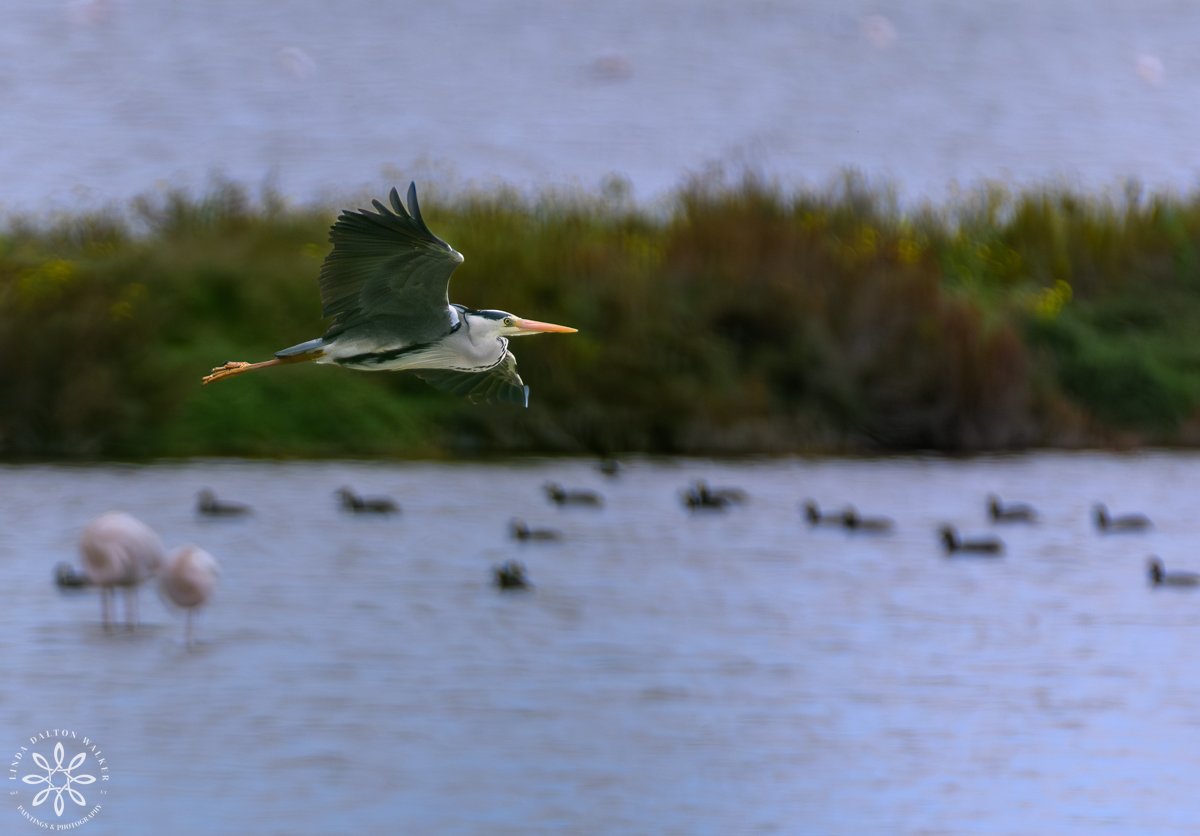
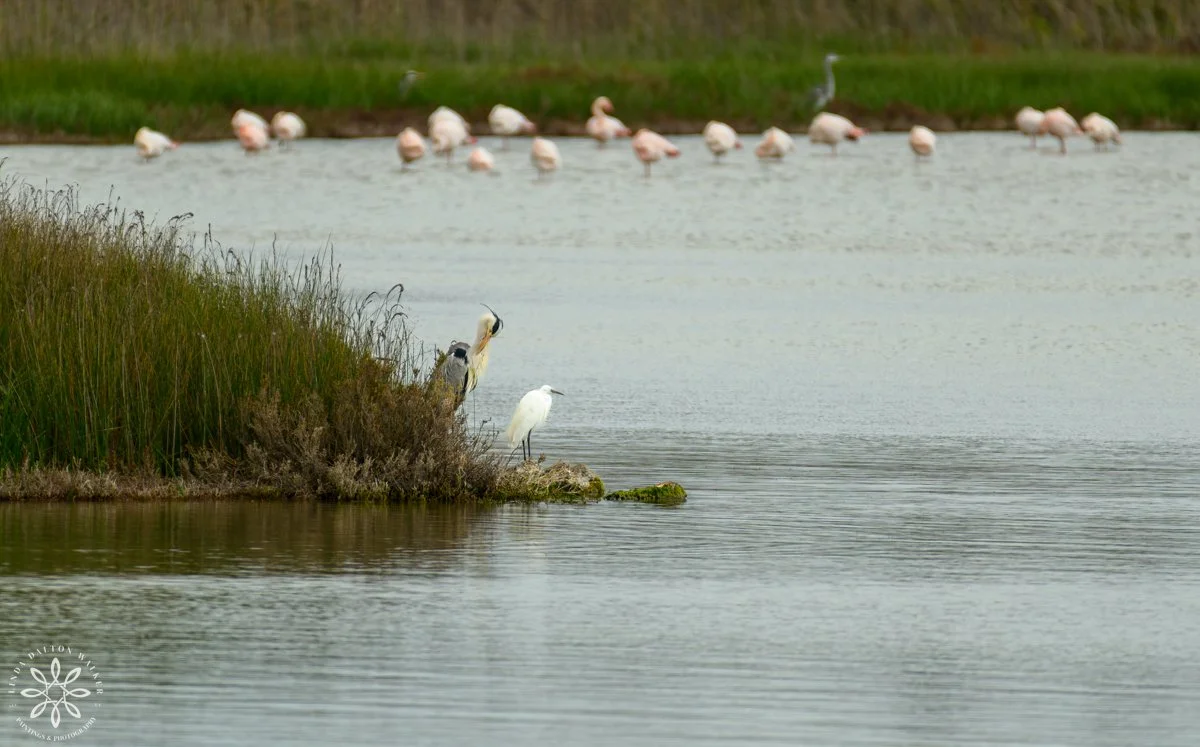
Image One: Great Blue Heron
Image Two: Great Blue Heron with Little Egret.
History of Vendicari Nature Reserve
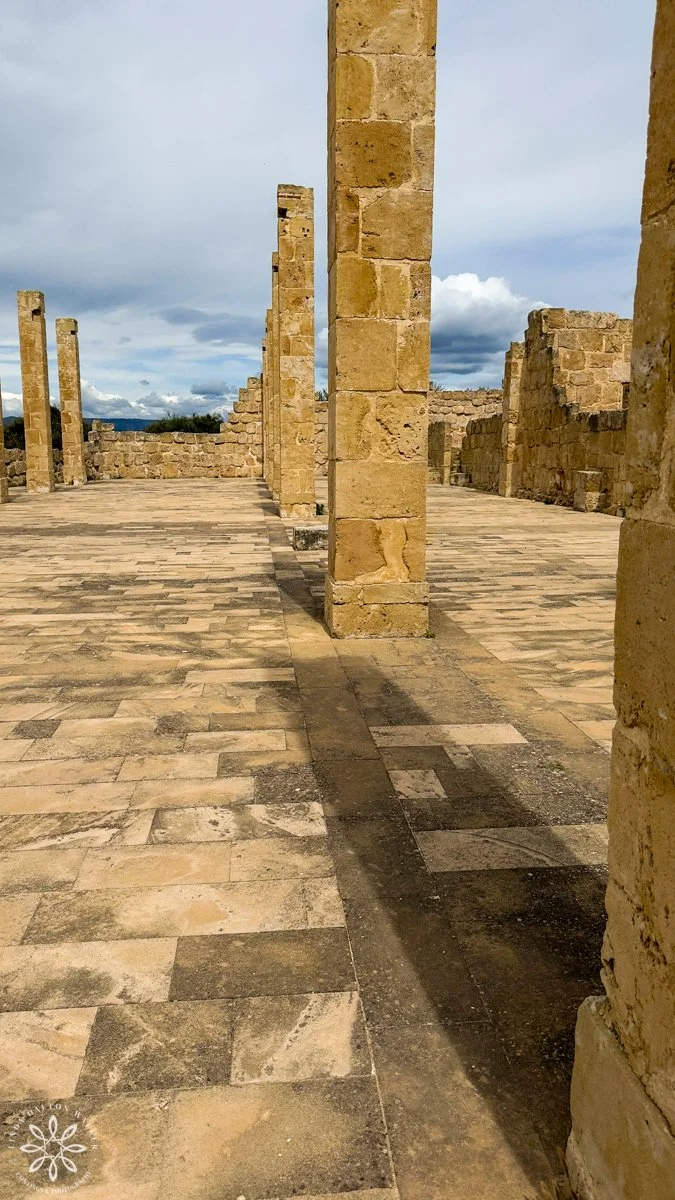
The history of the reserve has very ancient origins. There are still standing various archaeological and architectural structures, many of them from the Greek Era and Byzantine Age.
Some remains of tuna fishing factories are still prominent. Tuna fishing was very important in Sicily and the factory was built in the 18th century, however, tuna fishing dates back to the Greek era. In 1943, after the tuna was over-fished, the facility closed its doors.
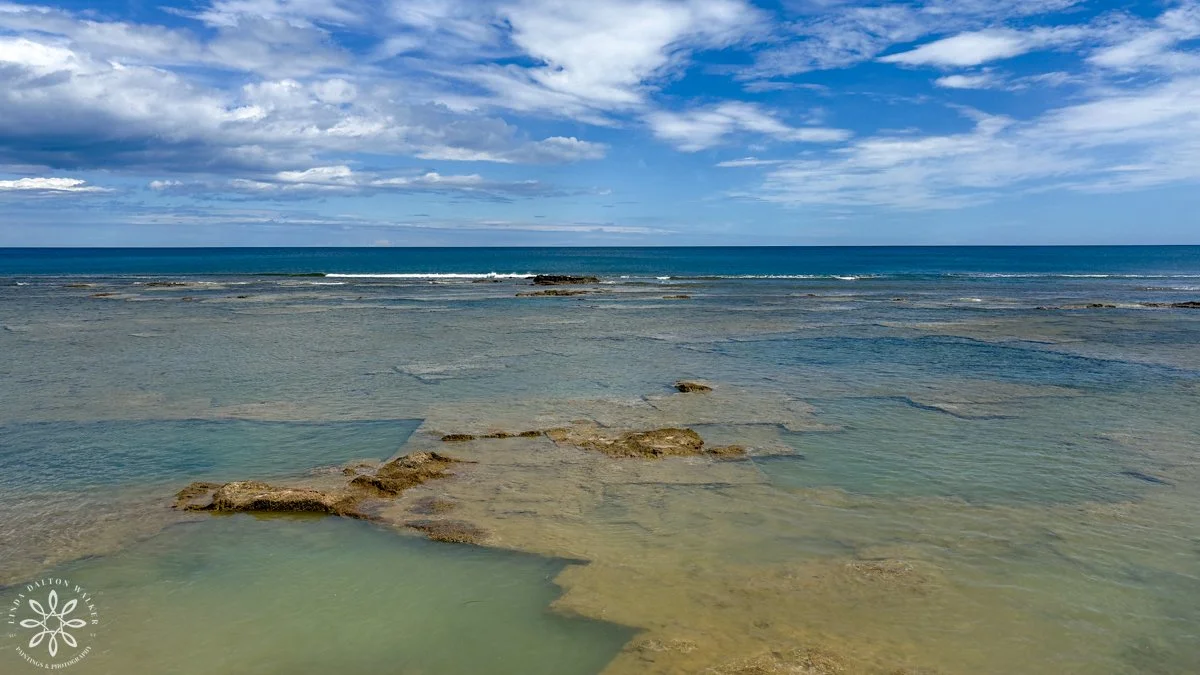
Ionian Sea borders the Vendicari reserve.
Priolo Natural Reserve, Sicily’s Only Nesting Area for Greater Flamingos
Our second location was the Priolo Natural Reserve. It is the only nesting site in Sicily, the rest are migrational stop overs. This location was founded in December of 2000. There has been incredible work preserving the area by Lipu, who has been managing this area since 2001. First documented chicks in this area were in 2015. Lipu is the Italian League for the protection of birds.
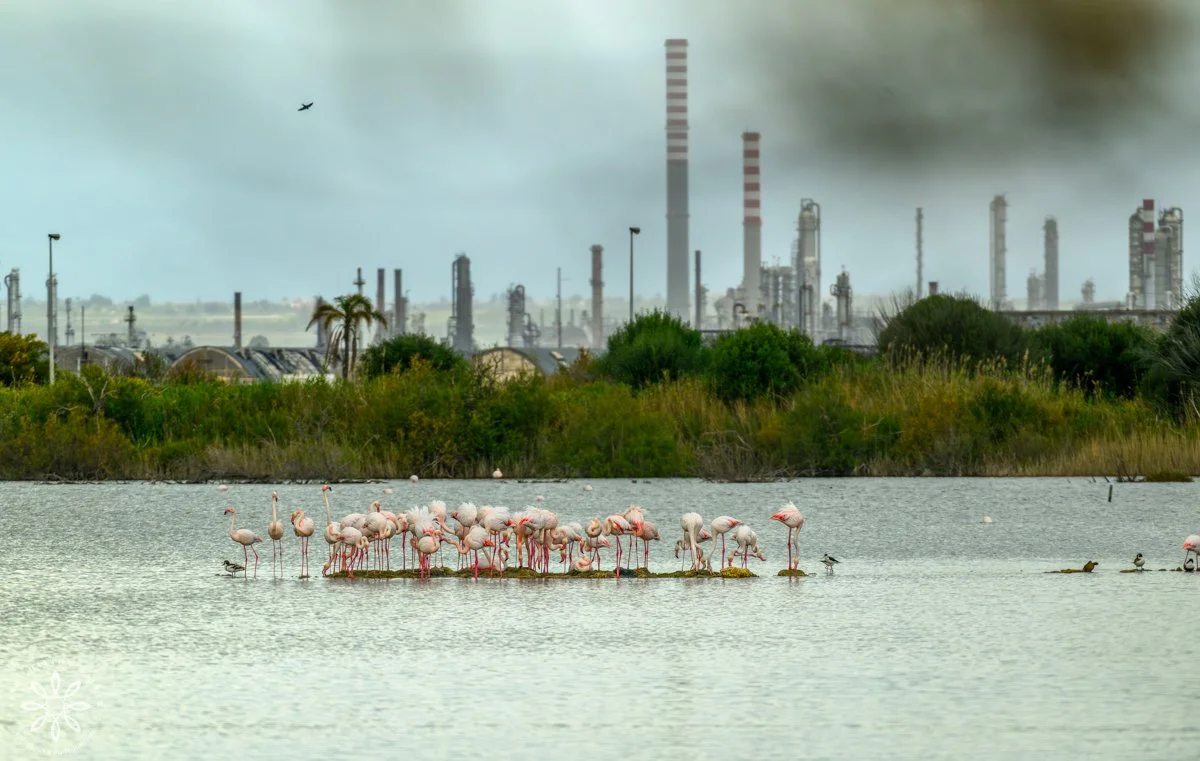
Priolo Natural Reserve with a Petrochemical Plant in The Background.
Scenes like this take my breath away, and makes me shake my head wondering just what are we doing as a civilization?
Although this beautiful reserve has the backdrop of a petrochemical plant, which looks like a Dystopian image, the Flamingos are doing really well in this area. It is definitely not something I expected as I peered through the holes in the blinds to photograph the flamingos.
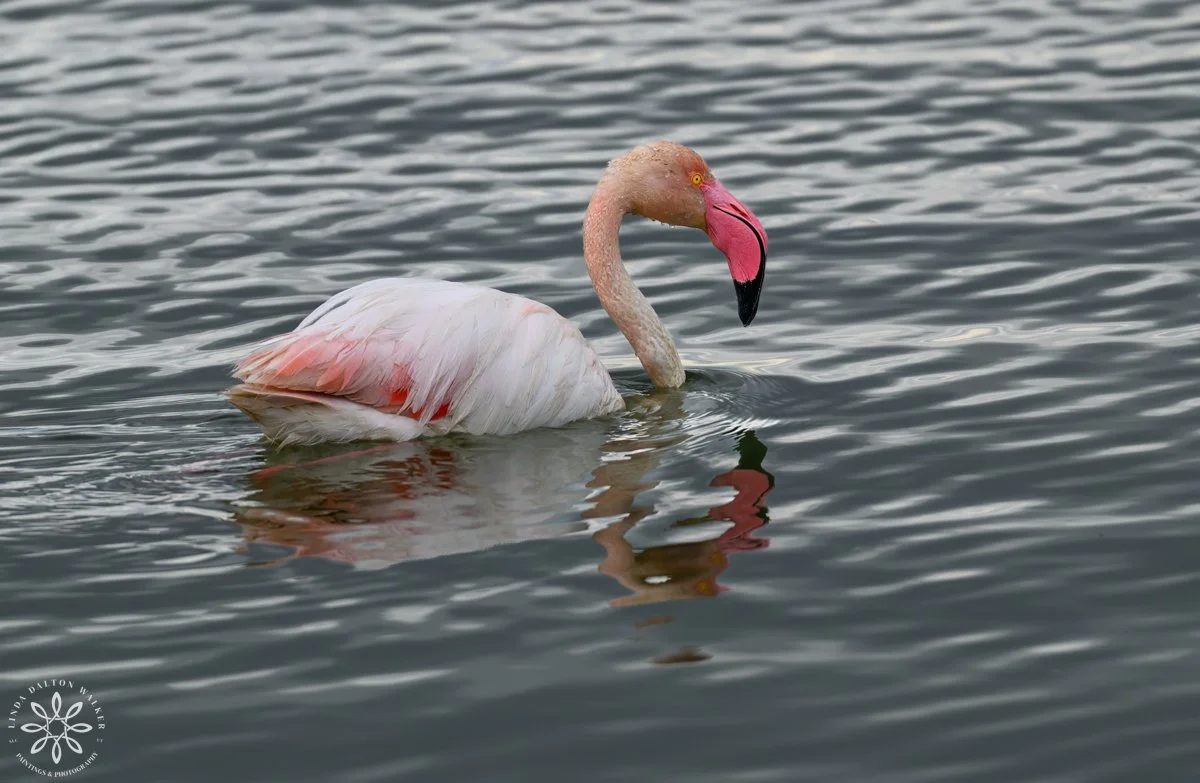
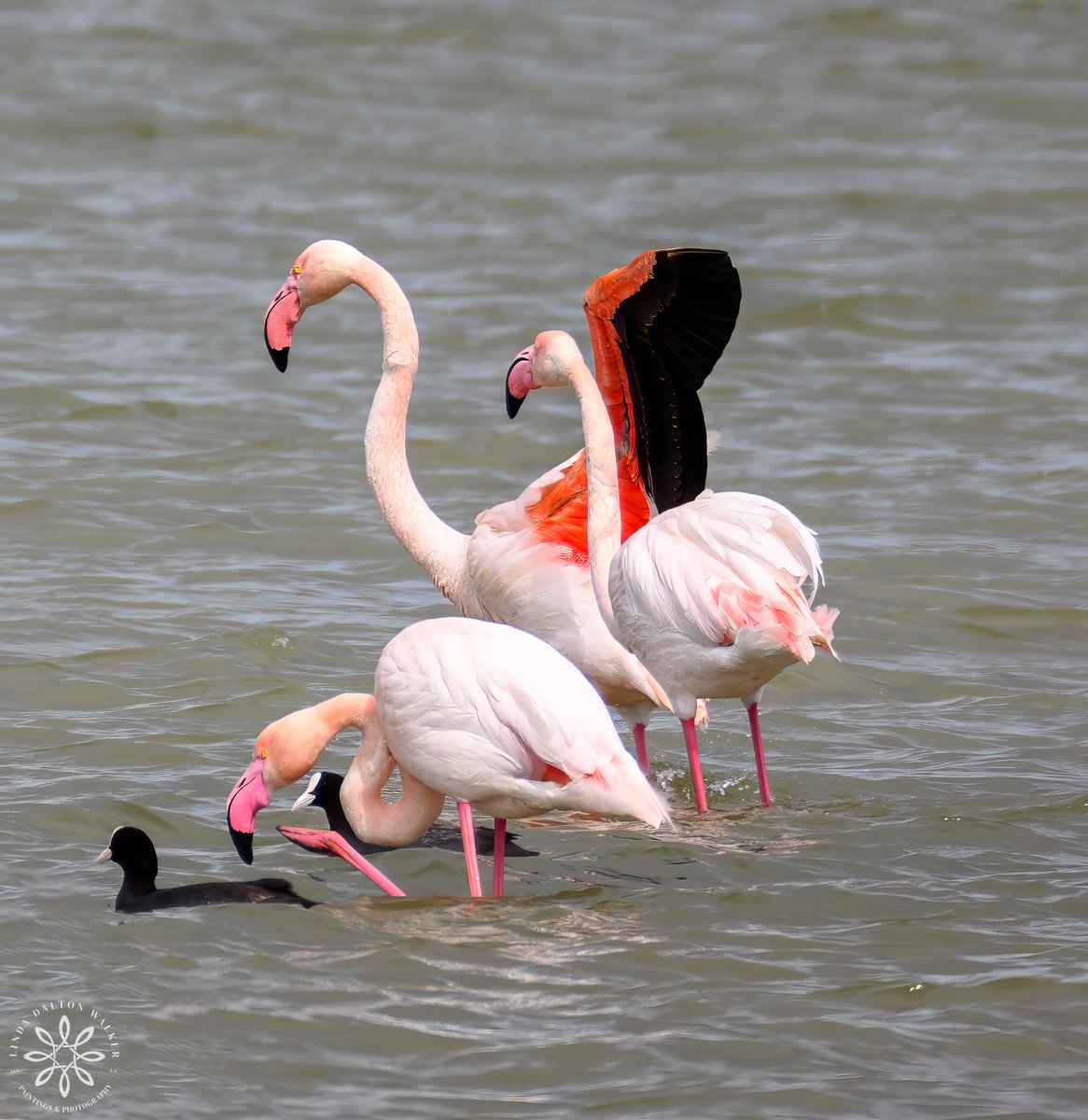
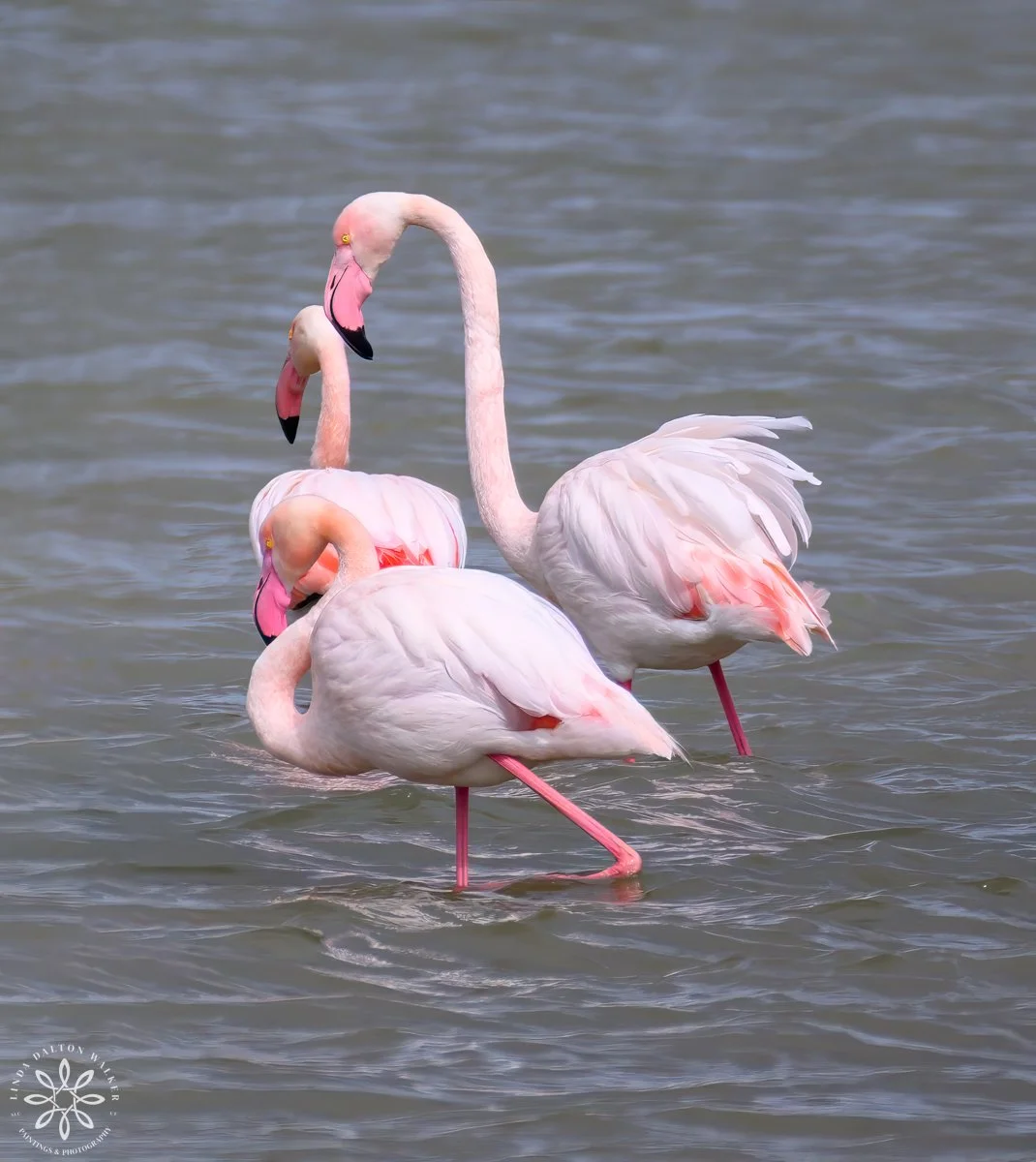
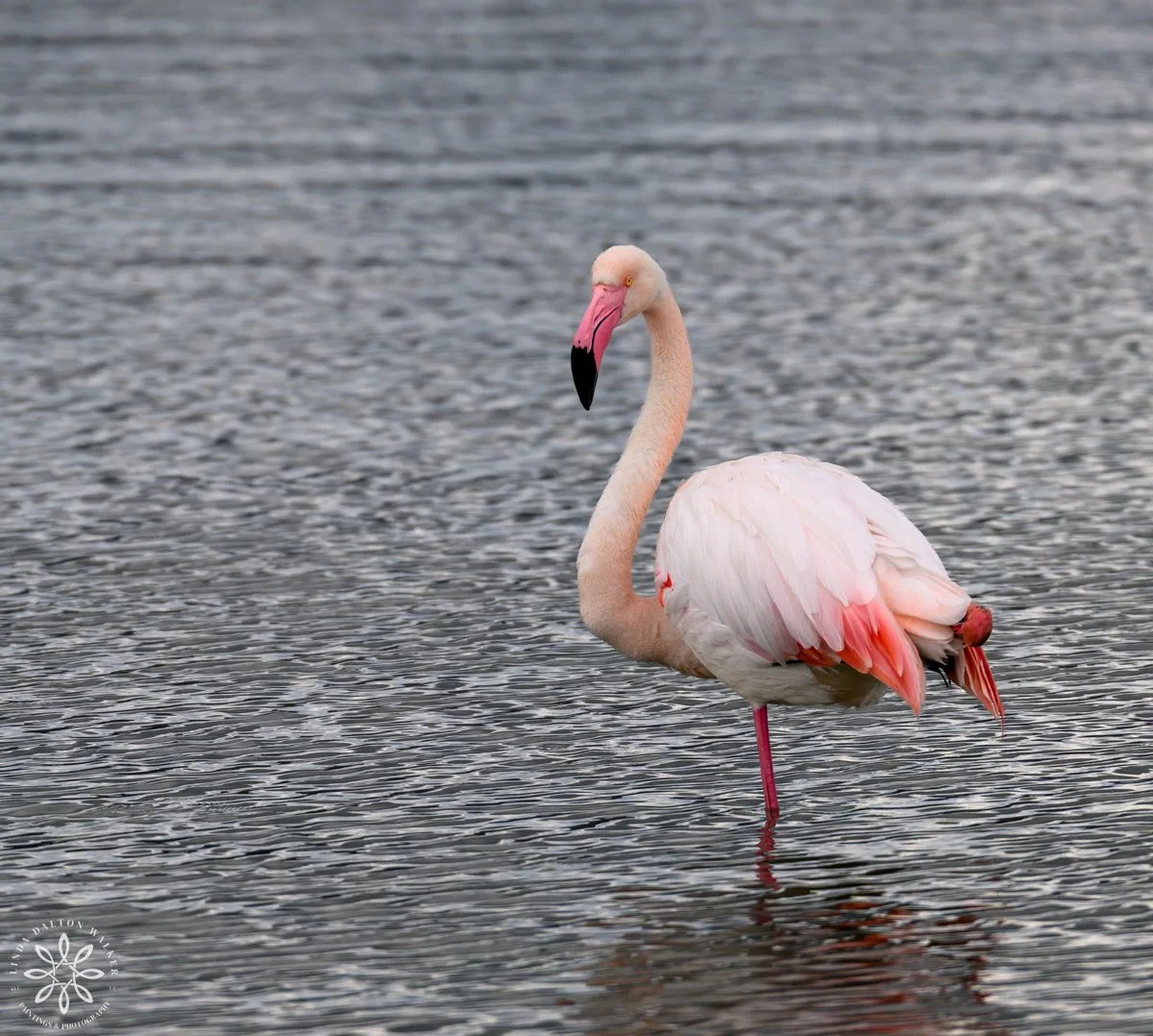
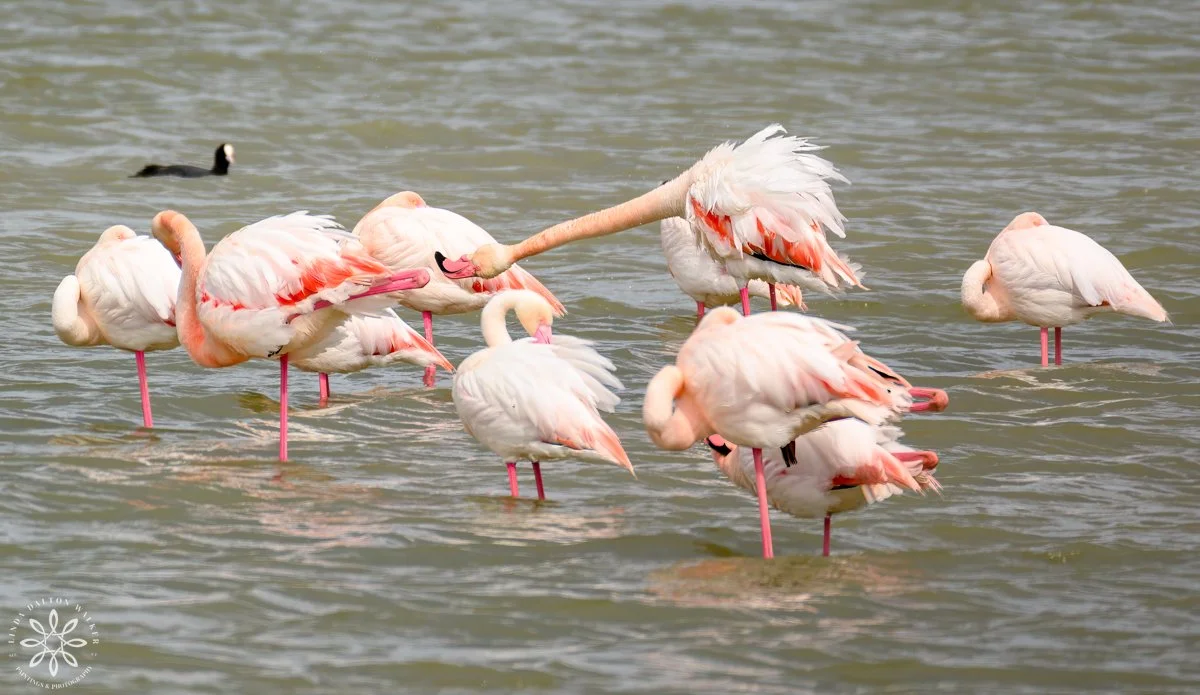
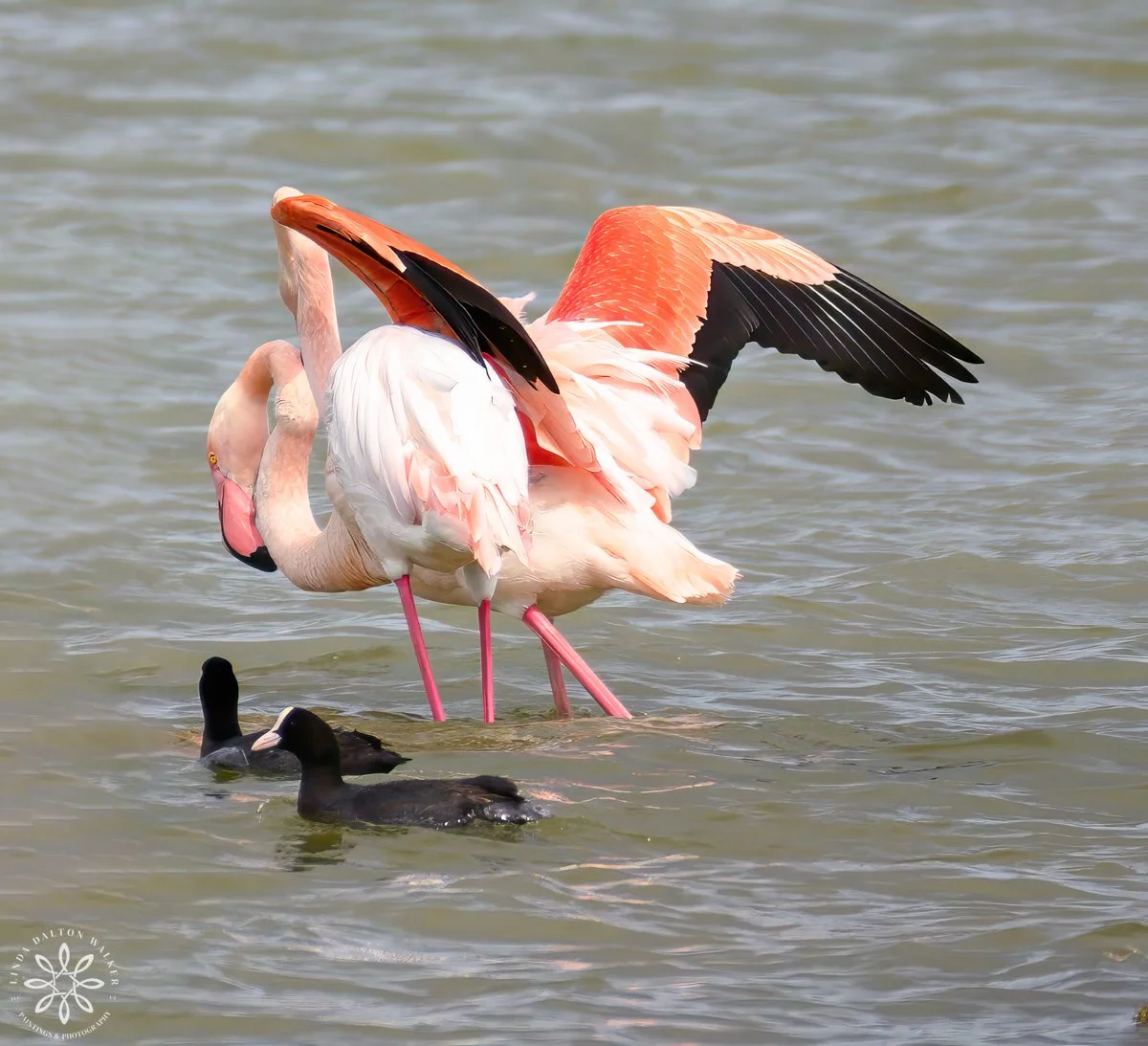
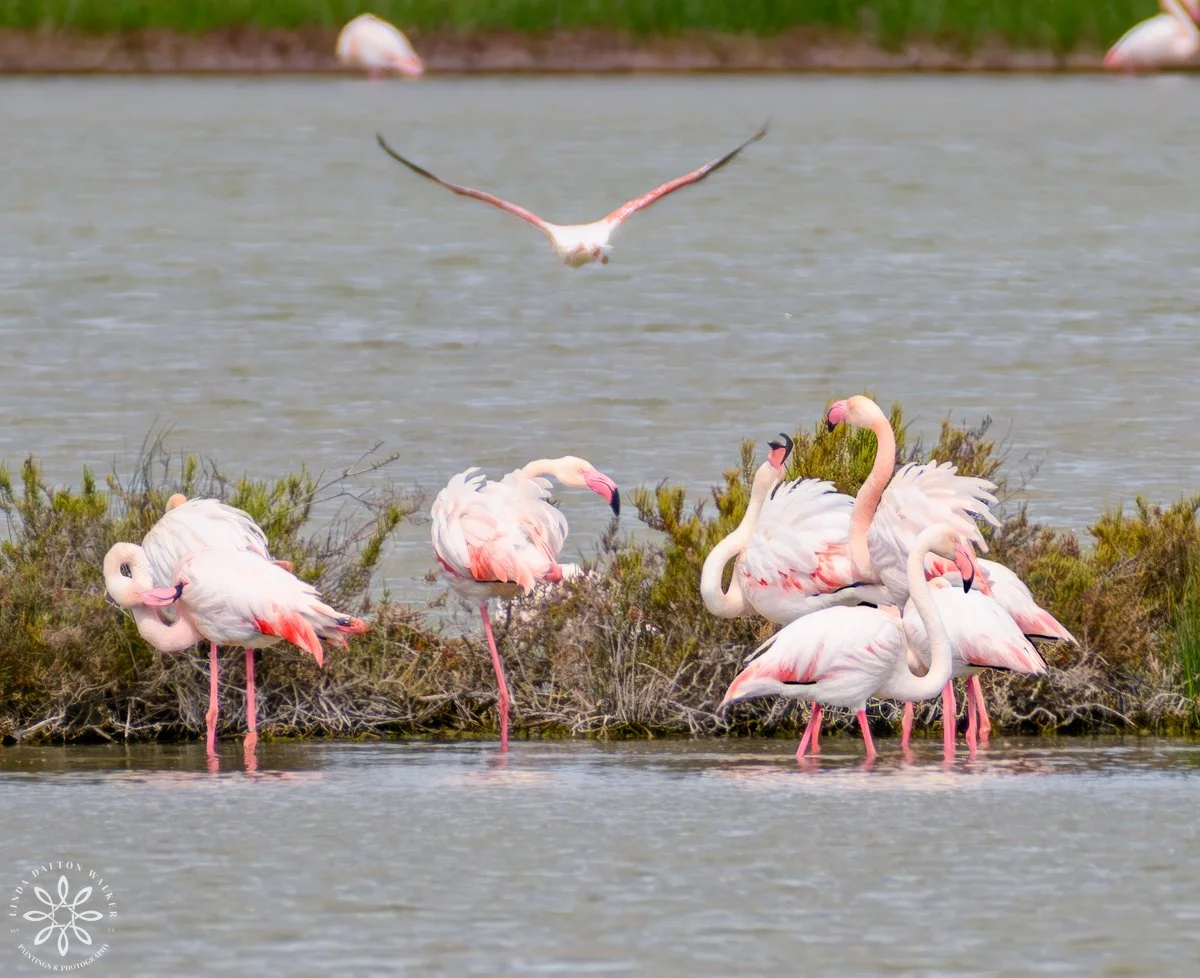
Well, this image just makes me laugh. I’m sure it has something to do with mating, but still - what a long neck.
What It’s Like To Photograph At The Protected Priolo Natural Reserve
The 2nd location was a walk on a dirt road, and then a climb over and through some tree branches. In this way the area is more secluded and protected. Again, we photographed through a couple different blinds and were able to get some closer shots of the flamingos. Shooting through the blind, although is not my favorite method of photography, keeps the animals safe and ensures they are not spooked by humans and then consequently abandon their nest because they would think the area is unsafe.
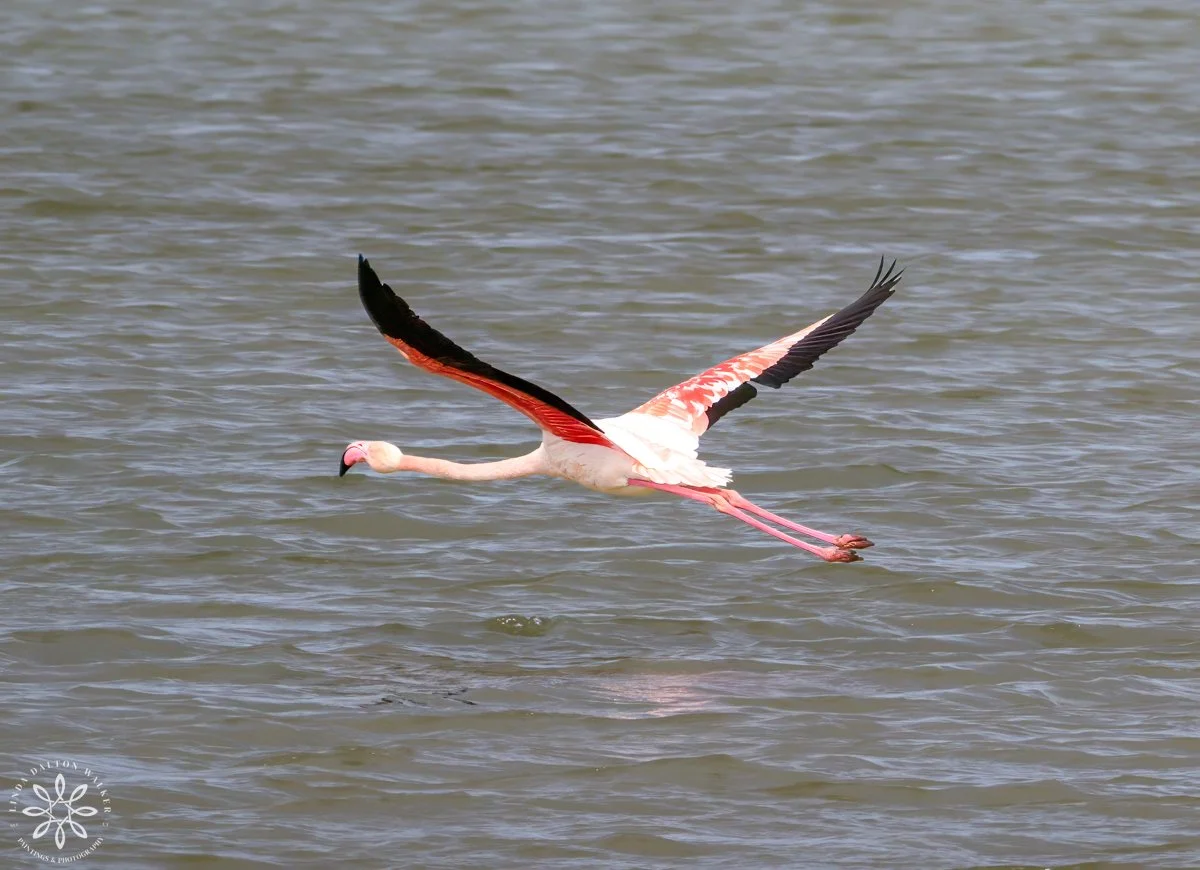
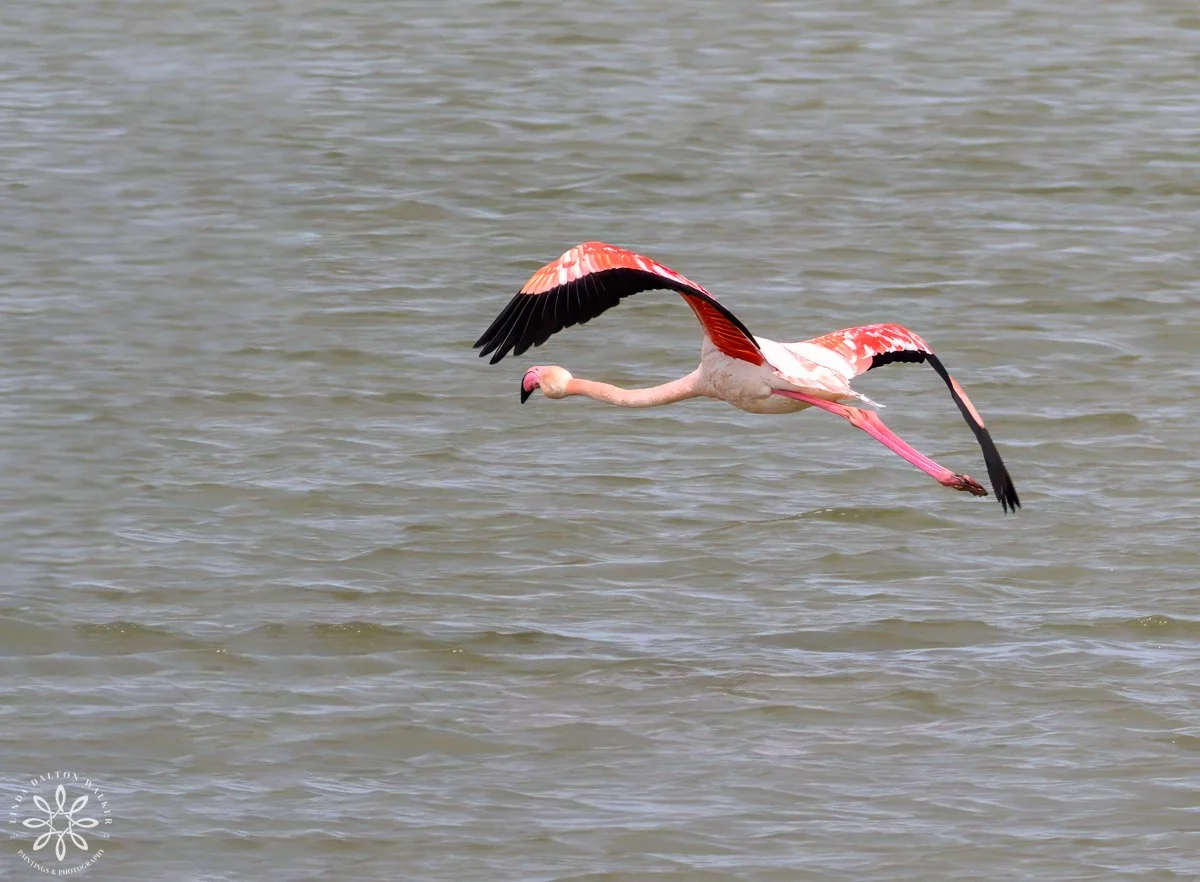
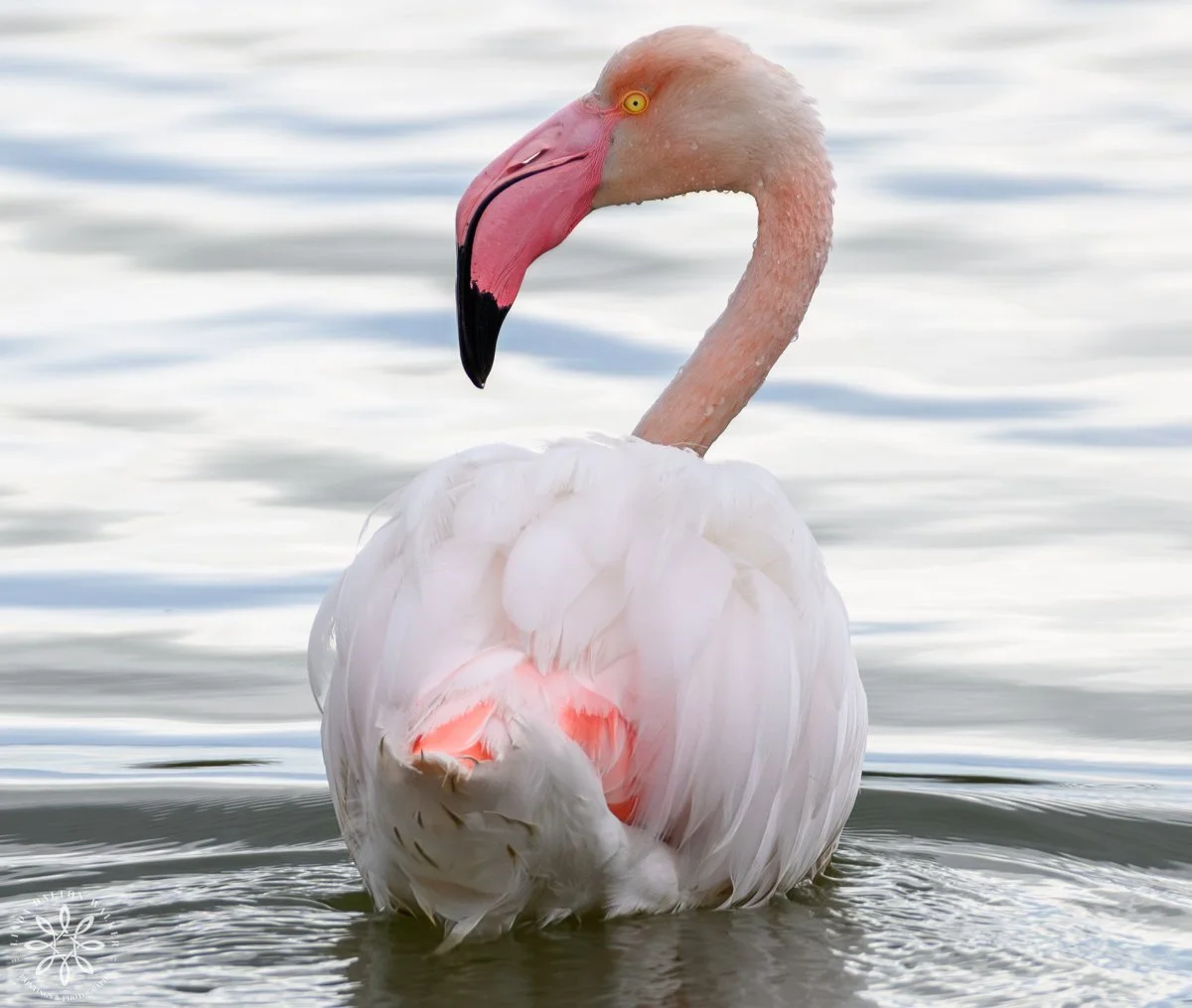
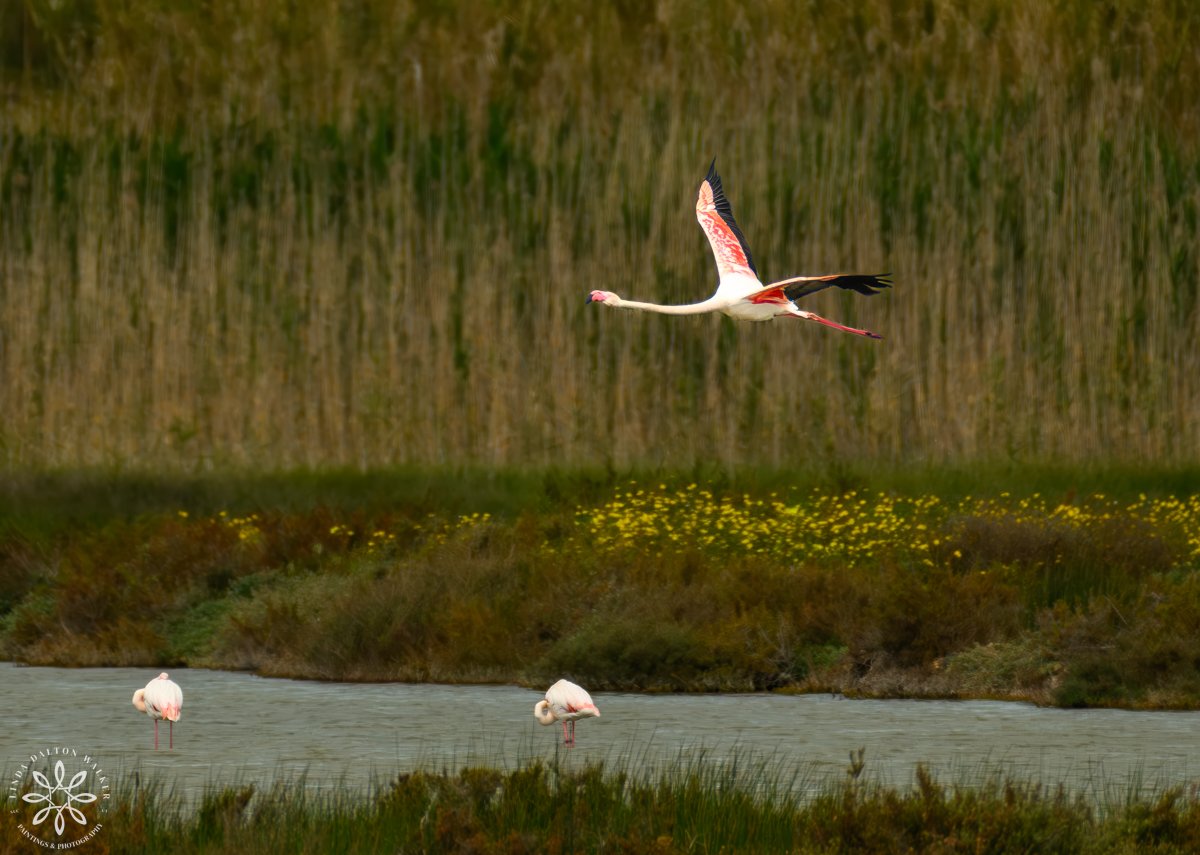
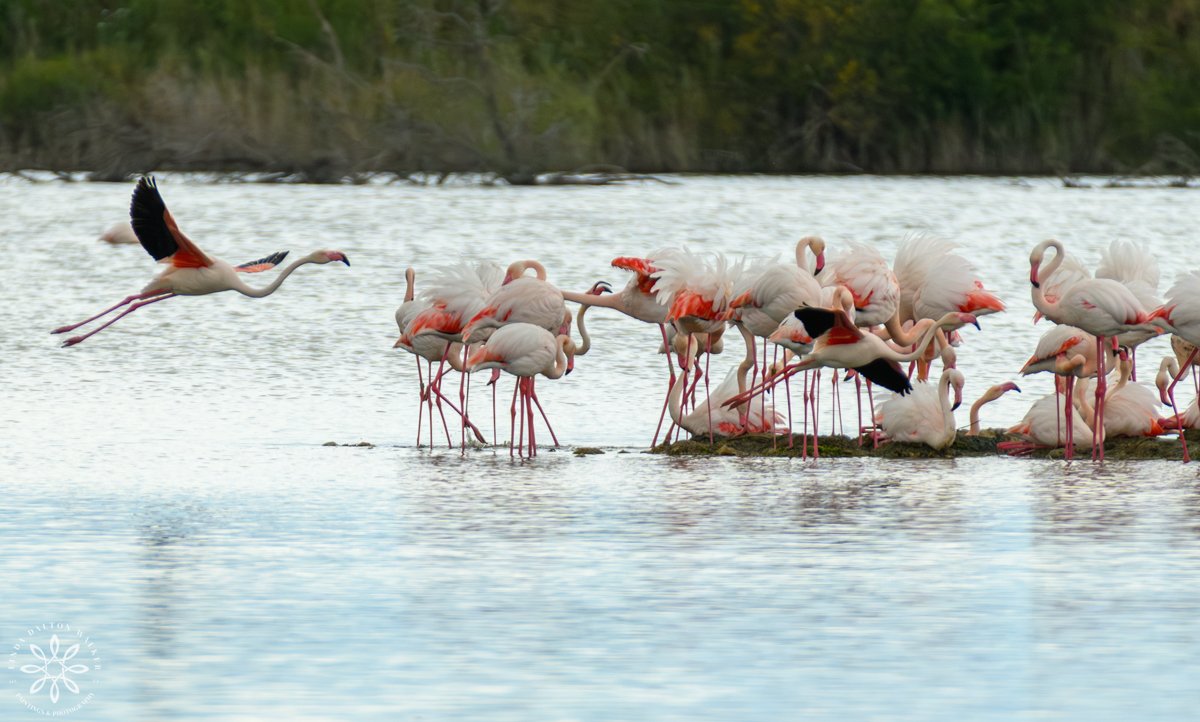
Greater Flamingo in Flight - doesn’t it look happy? This is when you can really see the colors of the wings.
Greater Flamingo Facts: Appearance, Flight, And Temperature Regulation
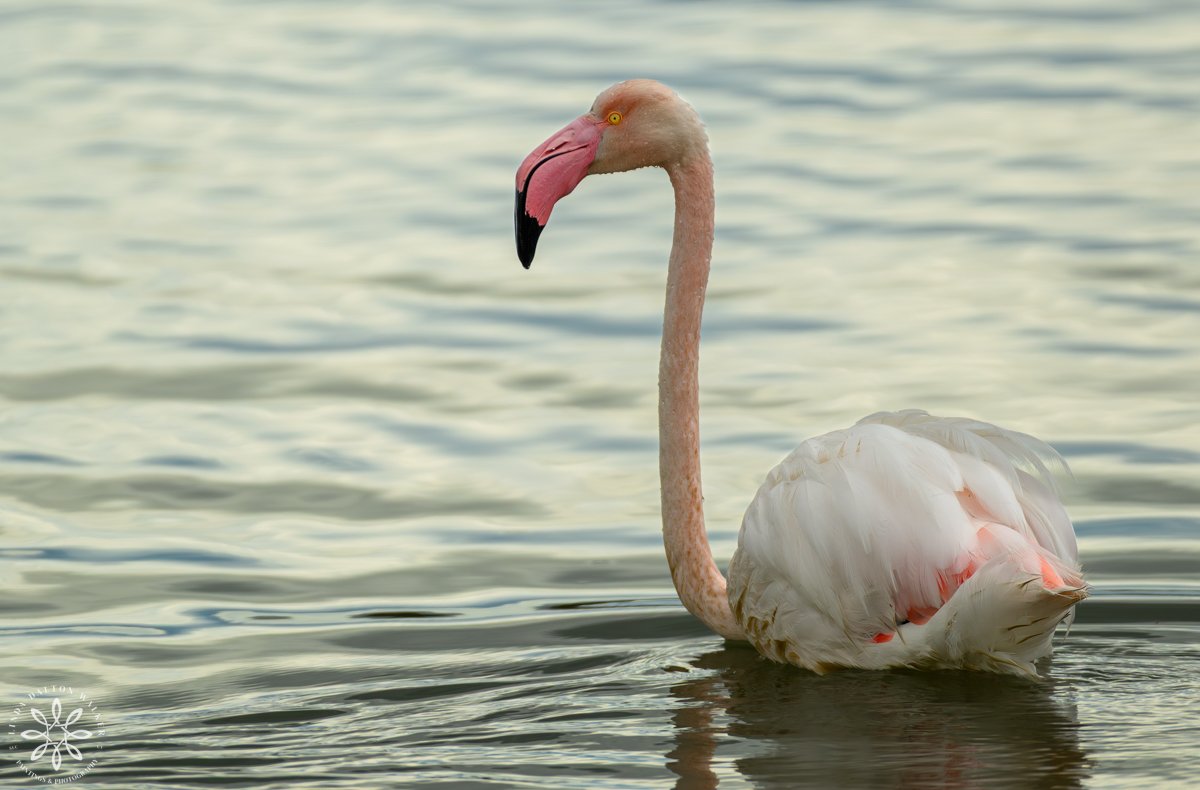
The Greater Flamingos are distributed from Africa and southern Europe through West Asia to South Asia. They have a very large, long neck, a big kinked bill, and very long pinkish legs. Plumage at rest is whitish with pale pink blush with some deep pink visible on the edge of the closed wings. When they fly their long necks and legs are extended. It is at this point the deep pink, and black wing patterns are on display. This flamingo is linked to the myths of the phoenix - the firebird rising from ashes.
To begin flying, they must run across the water in order to get airborne, and then do the reverse when they land. This is another reason why it is important for them to be in shallow water, and for us not to frighten them. Doesn’t the Flamingo in the above image look like it’s smiling and content?
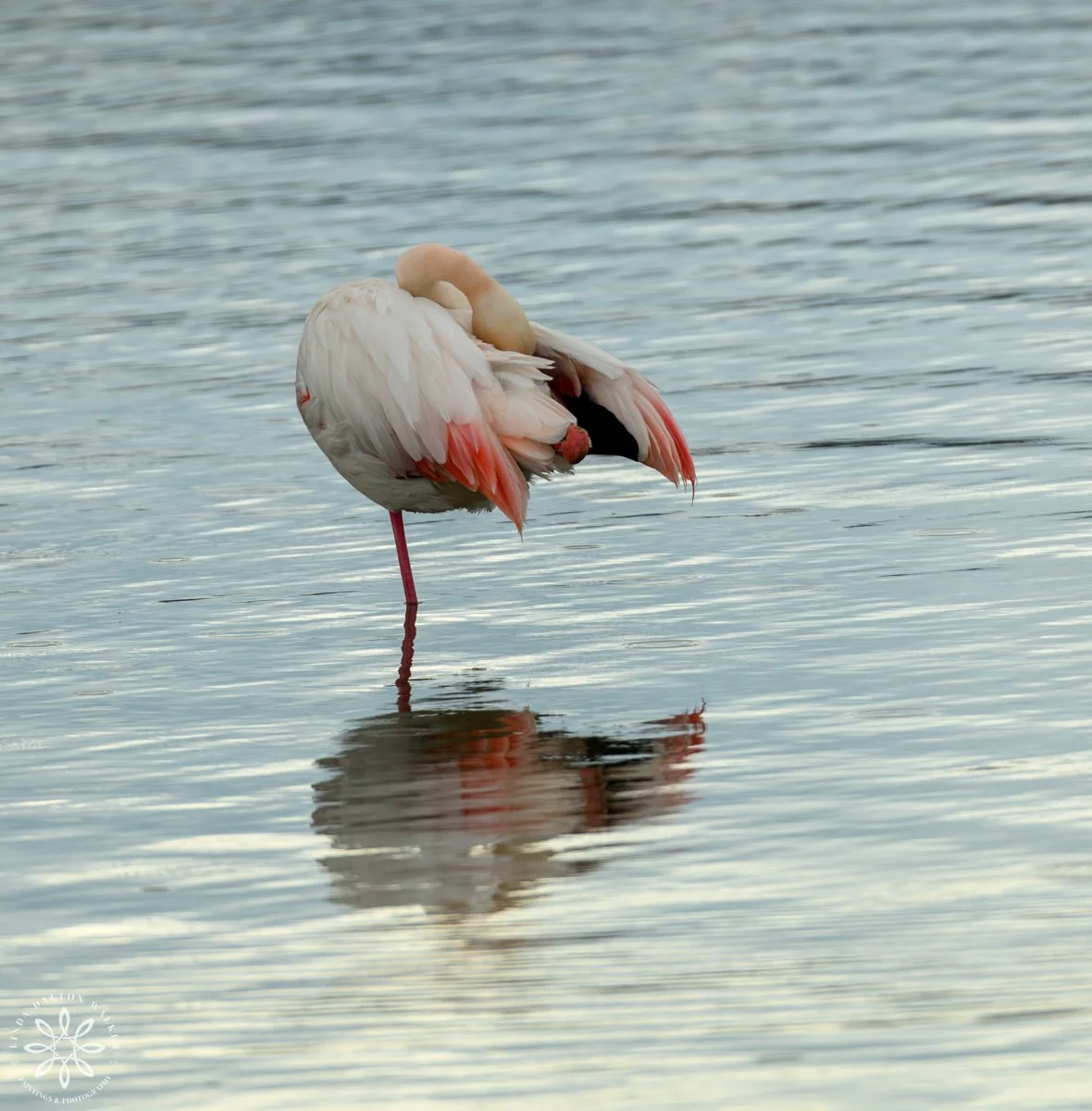
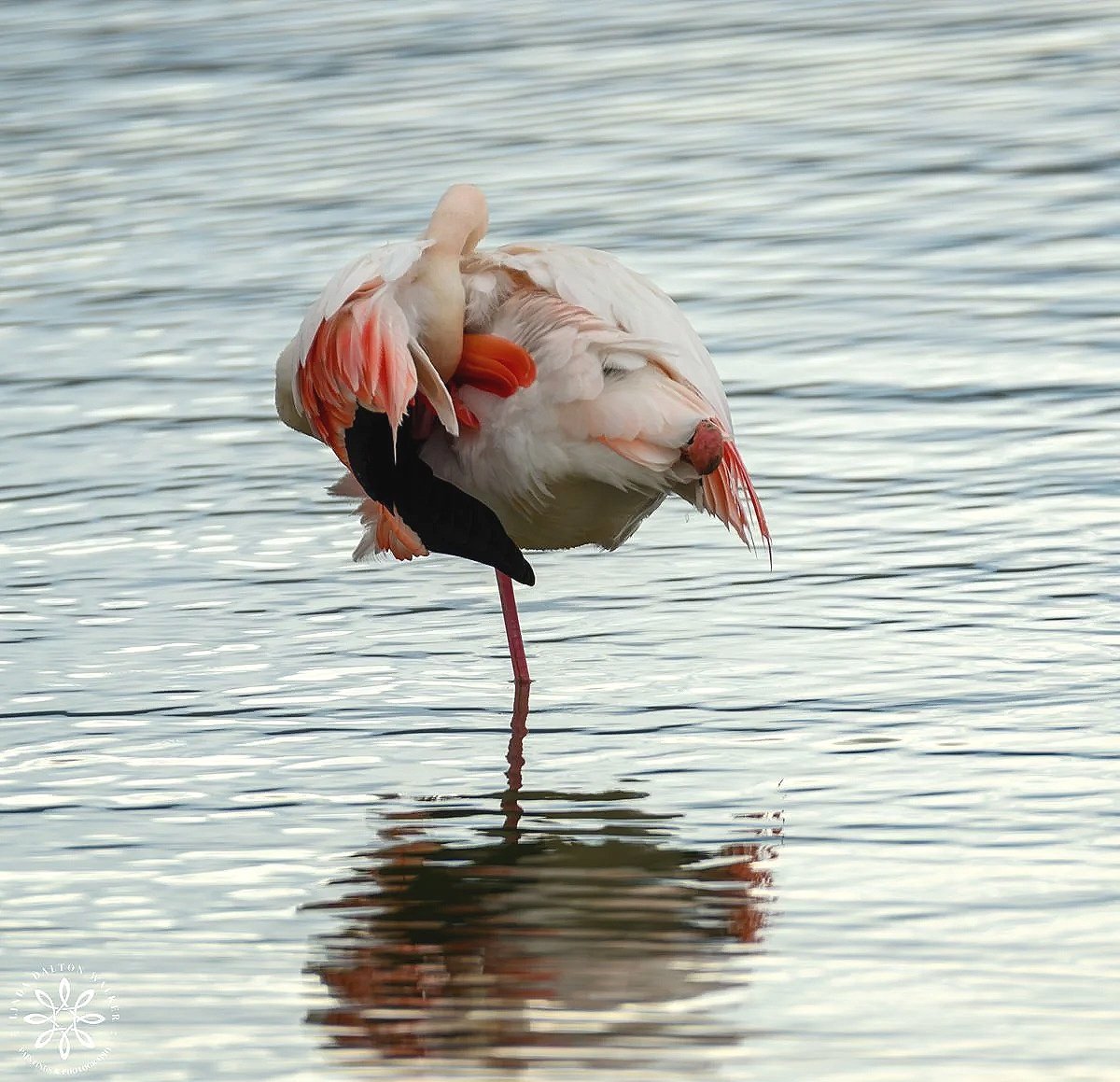
The Greater Flamingos stand on one leg to help regulate their body temperature. The water is very cold, so by standing on one leg, they do not get as cold.
Greater Flaming Breeding Habits
During mating season the Greater Flamingo is monogamous, unless the brood is unsuccessful, then the female will look for another mate. They typically only have one brood and only lay a single egg. Incubation is carried out by both members of the pair. This period lasts around 27 - 36 days. The adult survival rate is high, with some members living up to 40 years.
The success of the nest depends upon the water level - if it is too low, the hatchlings are exposed and vulnerable to prey. If the water is too high, the nests will drown, and nesting will not be successful.
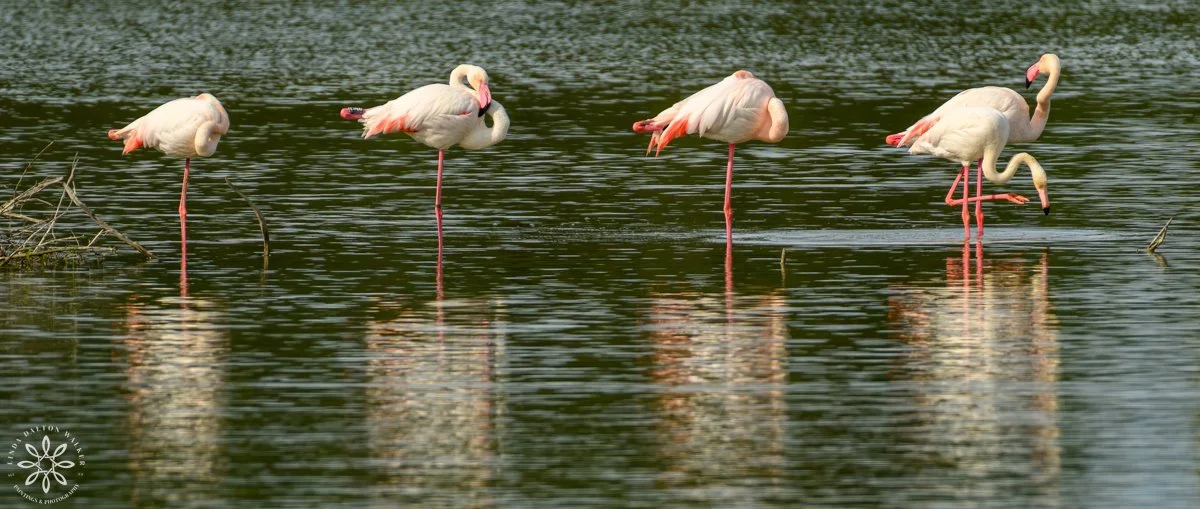
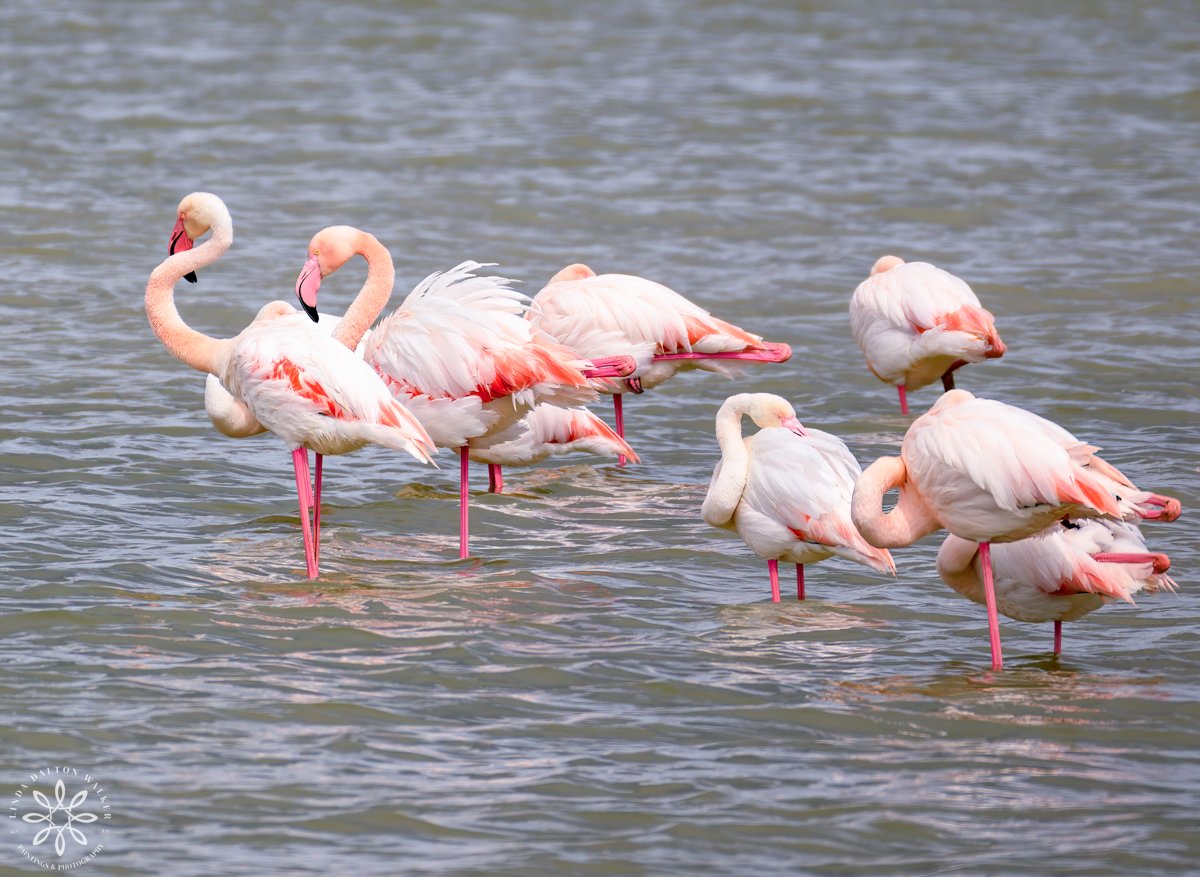
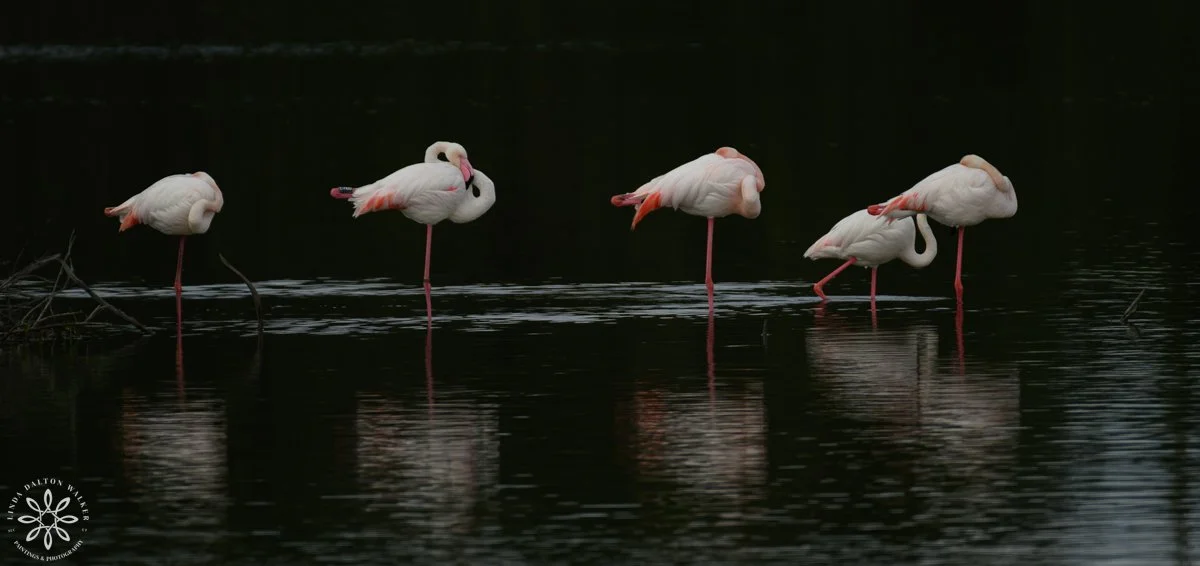
All in a row - Grater flamingos. I loved photographing the S curves of their necks.
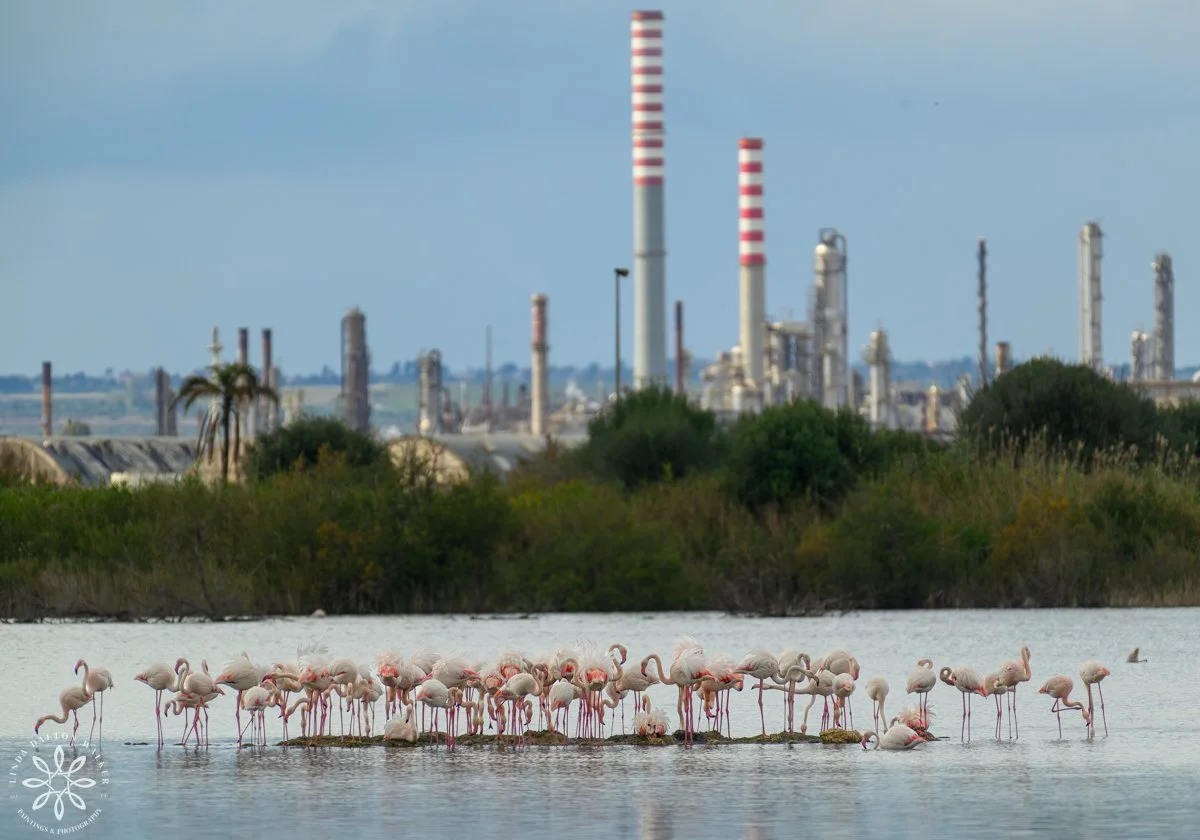
This image was taken later than the first one, perhaps when the factories stopped for the day.
Environmental Threats Facing the Greater Flamingos
Although, visits to Italy from the Greater Flamingos started in 2000, they were considered rare before 2015, and then magically they started showing up, and now one can find hundreds of them in Sicily.
However, they, just like most other birds and mammals, are suffering from habitat loss, hunting, trapping, collisions with structures or vehicles, and sadly from lead poisoning. There are currently around 500,000 and 900,000 individual Greater Flamingos in the world.
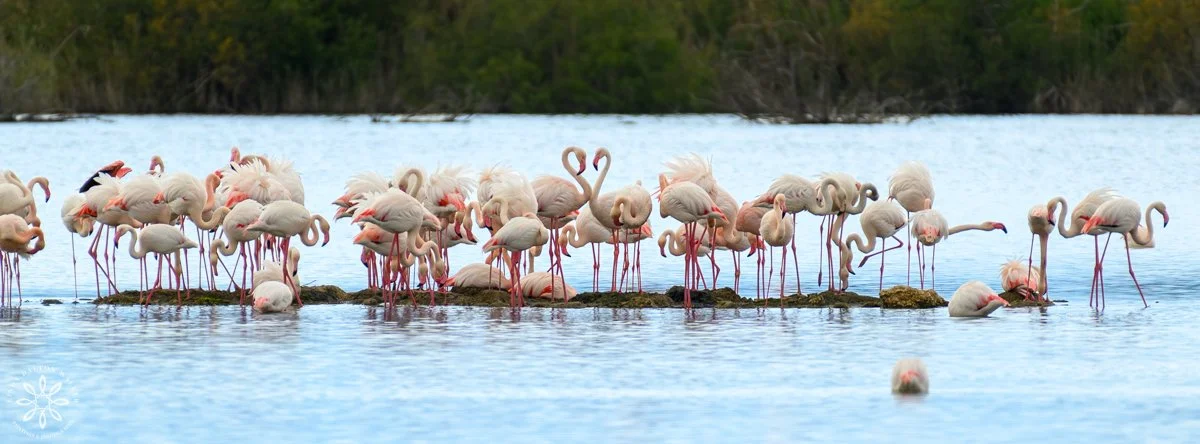
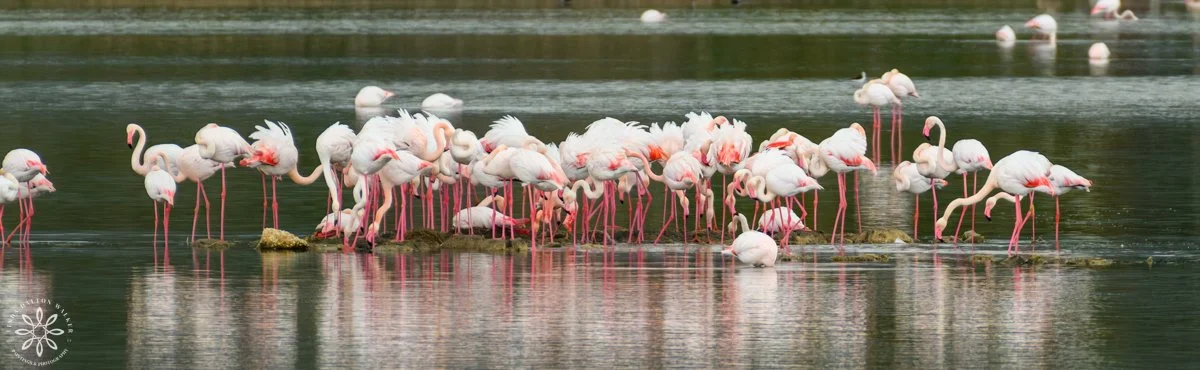
Greater Flamingos. I love the photographing the groupings and observing all of the interactions. Ah, Love… This piece recently won 2nd place in the Wasatch Camera Club in the Master’s Division.
Photographing Greater Flamingos in Wetlands: Frustrations and Positives
First and foremost when we photograph at a wetland, we have to consider the safety of the animals we are photographing. I will be the first to admit that I get very excited about photographing what is in front of me, and I am far from perfect, but most of the time I think about how my presence is impacting the animals I am photographing.
Photographing through a blind, especially ones with little holes barely large enough for a camera, is not the best photography situation, but we adapt for the safety of the birds.
During the second location, a young family arrived to look at the birds. I invited a little girl to sit by me and tried to get her to use my binoculars to help her see the birds, she tried, but was unsuccessful, but it was a special moment I will remember. And hopefully, one day she will become a wildlife photographer or an environmentalist who helps protect the birds.
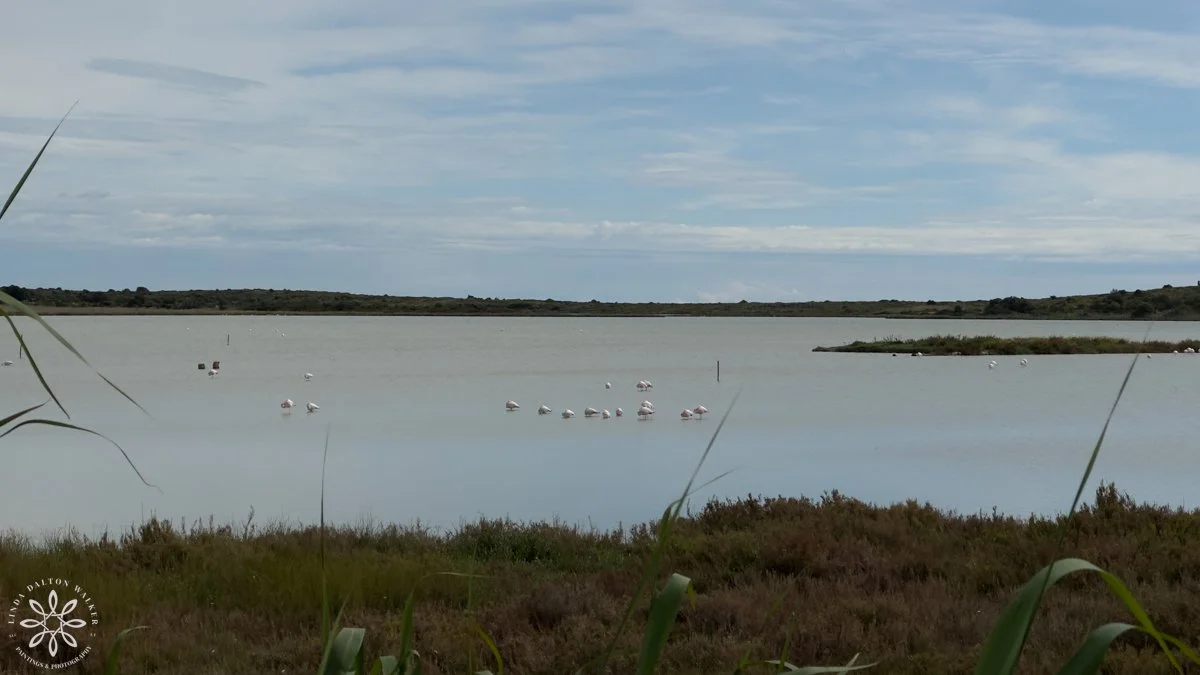
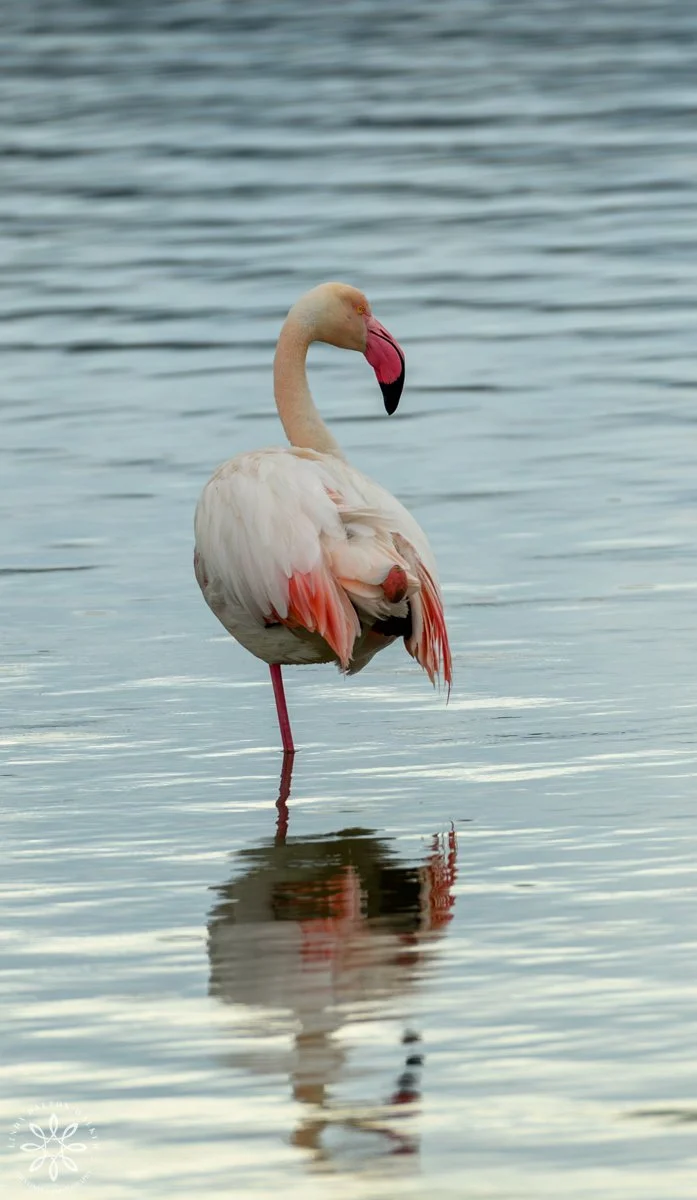
I hear many people say, Ah, my cellphone is so good, I don’t need a camera. The first image, in this series, is taken with my cellphone, the second one I photographed with my Nikon Z8. Yet, it is not just the camera that makes a good photo, it is the years of experience and the understanding of the tools you are using. I admit some great candid shots or landscape shots can be taken with a cellphone - if you know what you are doing. The same applies to an expensive camera. If you do not have the skills, the image will be no better than a cellphone.
FAQS
Are there Flamingos in Sicily, Italy?
Yes, Greater Flamingos can be seen in Sicily. While they are primarily migratory birds stopping over between Africa and Europe, small populations can be spotted year-round.
The three best places to see Flamingos in Sicily are:
Vendicari Nature Reserve in southeastern Sicily, a protected wetland with blinds for wildlife viewing.
Priolo Natural Reserve near Syracuse, which is the only active nesting site for flamingos in Sicily. The best time to visit is spring, when flamingos stop over during their migration from Tunisia to Spain.
Trapani and Paceco Salt Pans (Western Sicily): A key resting and feeding ground during migration routes.
When is the best time to photograph flamingos in Sicily?
Spring… roughly April through June… is the prime season. Greater Flamingos arrive from North Africa (primarily Tunisia) during their migration north toward Spain, stopping in Sicily to breed and raise their chicks. This is when you'll find the largest concentrations at both Vendicari and Priolo.
Why do flamingos stand on one leg?
Greater Flamingos stand on one leg to regulate their body temperature. Because they wade in very cold water, tucking one leg up against their body reduces heat loss. It's a natural thermoregulation behavior, not rest.
Are Greater Flamingos endangered?
Greater Flamingos are not currently endangered, with an estimated global population of 500,000 to 900,000 individuals. However, they face serious threats including habitat loss, hunting, trapping, collisions with structures, and lead poisoning. Their relatively recent appearance in Sicily in large numbers since 2015 is considered an encouraging conservation development.
Can I purchase a fine art photograph of Greater Flamingos in Sicily?
Yes, wildlife photographer Linda Dalton Walker captured Greater Flamingos at both Vendicari and Priolo Natural Reserve in Sicily. Fine art prints are available for commission and are now listed on her website. Contact Linda directly through her contact page to inquire about specific images or sequences from the trip.
Commission a Greater Flamingo Fine Art Print
I was so drawn to the area and the birds; I really didn’t want to leave. I hope you have enjoyed reading about these rare birds, birds we do not have in the U.S.
These images are now on my website, and if you are interested in any of these images for your home, you can order them on my website, or let me know if you are interested in a different size through my contact page. I also have other image of the flamingos - just a few… lol. If you want to see any of them from a particular sequence in this blog, let me know, and I’ll work with you.
If you enjoyed this blog you might like my blog about the White Storks I had the fortunate opportunity to photograph while in Sicily, Italy.
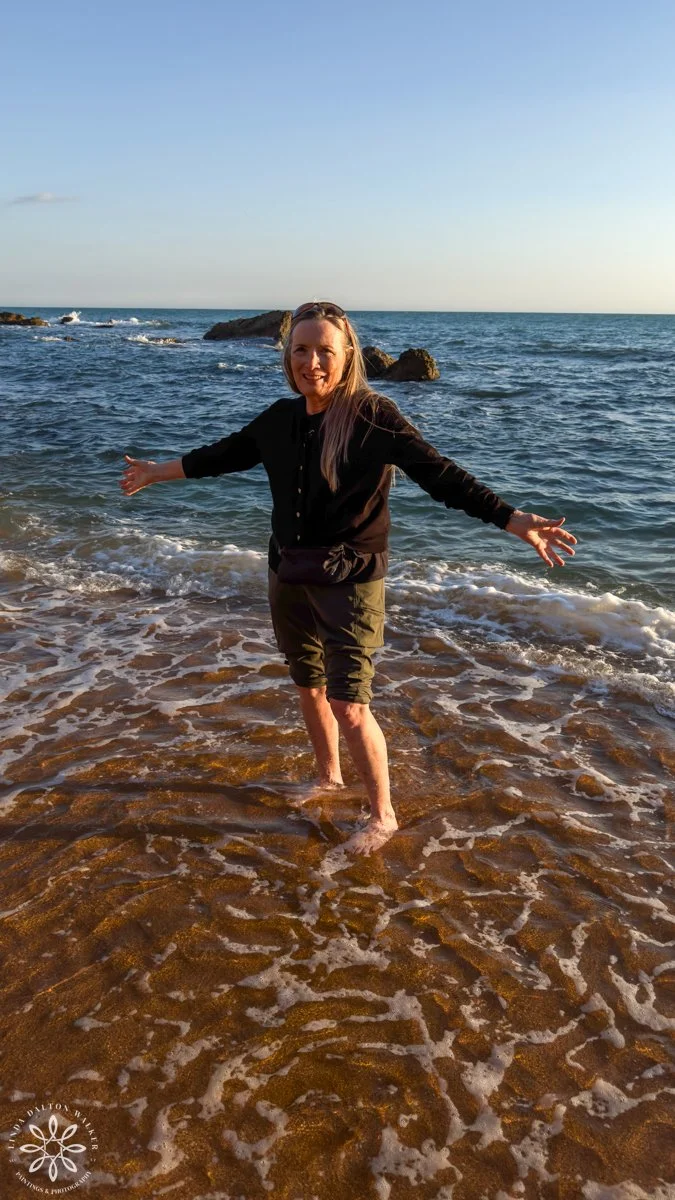
Thank you for supporting my conservation efforts. Let’s do what we can to help save our amazing birds of the world . Linda Dalton Walker
Image credit: Sue Halligan
…“It begins by holding each other’s eyes
the way we behold sunrises or the first cherry blossoms,
which is to say we assume we’ll find beauty there.
And perhaps some display of open hands—
a gesture with palms up—that suggests both
I offer myself to you and I receive you
There should be a quiet moment in which
we hear each other breathe—
knowing it’s the sound of the ocean inside us……”
From- For When We Greet Each Other, by poet Rosemerry Wahtola Trommer